Команда PetNivo по поиску технологий и продуктов | Команда по поиску поставщиков и разработке продуктов | Опубликовано: 10 ноября 2026 г.
Лоток получает характеристику «неприлипающий» одним из двух способов: за счет покрытия, нанесенного на пластик, или благодаря поверхности нержавеющей стали без покрытия. Покрытие помогает уменьшить прилипание, но этот слой со временем изнашивается. У стали без покрытия нет слоя, который мог бы отслаиваться, хотя у PetNivo нет лабораторных данных, подтверждающих, что комки отстают от нее лучше.
Что на самом деле означает “неприлипающий” применительно к лотку
Это определение охватывает два разных механизма.
На основе покрытия. На лоток (обычно из АБС-пластика) наносится отдельный слой, снижающий сцепление наполнителя и мочи со дном. В изученных нами описаниях товаров его называют “запатентованным” или “безопасным для животных” покрытием, не раскрывая химический состав, толщину или методику испытаний. Зато приводится конкретная цифра: прилипание снижается на величину до 70%.
На основе свойств поверхности. Дополнительный слой не наносится. Заявление опирается на сам металл, а нержавеющая сталь непористая. Это свойство материала, а не измеренная степень неприлипания, поэтому оно скорее дает повод протестировать образец, чем печатать рекламные обещания на странице товара.
Внимательно отнеситесь к оговорке “до 70%”. Это верхний предел, и даже при его достижении 30% прилипания никуда не девается. Ни в одном из изученных нами описаний эта цифра не преподносится как результат независимых испытаний. Ни один из вариантов не избавит вас от необходимости регулярно убирать лоток совком.
Пластик с покрытием и нержавеющая сталь: наглядное сравнение
Маркетинговые названия значат меньше, чем обоснования заявлений, поэтому в таблице сопоставляются доказательства и прозрачность информации.
| What you are comparing |
Coated plastic (e.g. ABS pan) |
Bare stainless steel |
| Where the non-stick effect comes from |
An applied coating layer |
The metal’s own surface; no coating applied |
| Evidence in listings |
A percentage claim (“up to 70%”), no test method in the listings reviewed |
No percentage claim; PetNivo has no published lab data |
| What can wear |
The coating, through scoop scratches and repeated cleaning; wear rate not published |
No coating to lose; the finish itself may show scoop marks (check on a sample) |
| Which surfaces are treated |
Not always stated: floor only, or walls too |
The pan is one material throughout |
| Details to request |
Coating type, thickness, coated area, test method |
Steel grade, sheet thickness, surface finish |
| In PetNivo’s range |
No coated-plastic litter box listed |
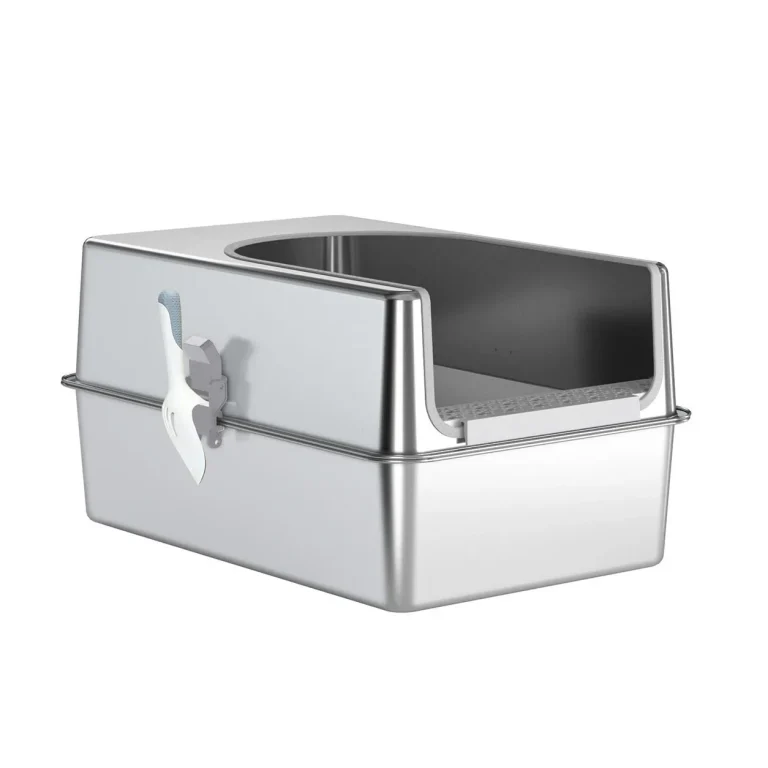
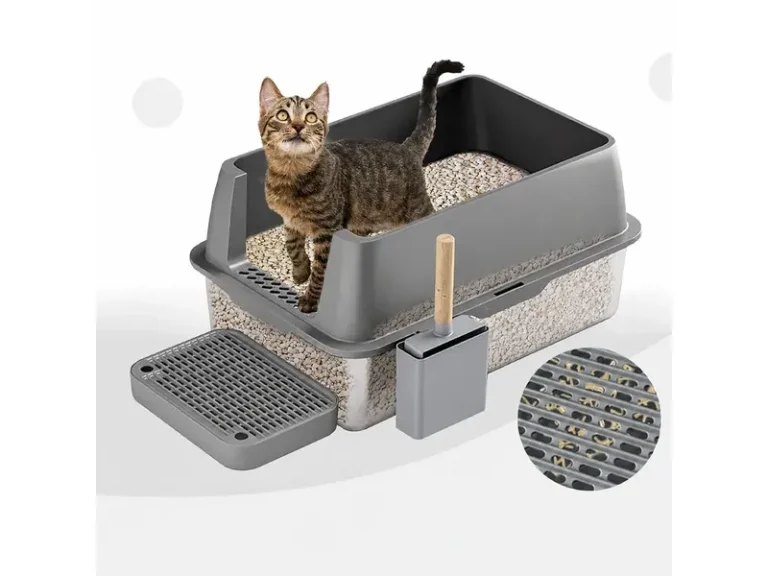
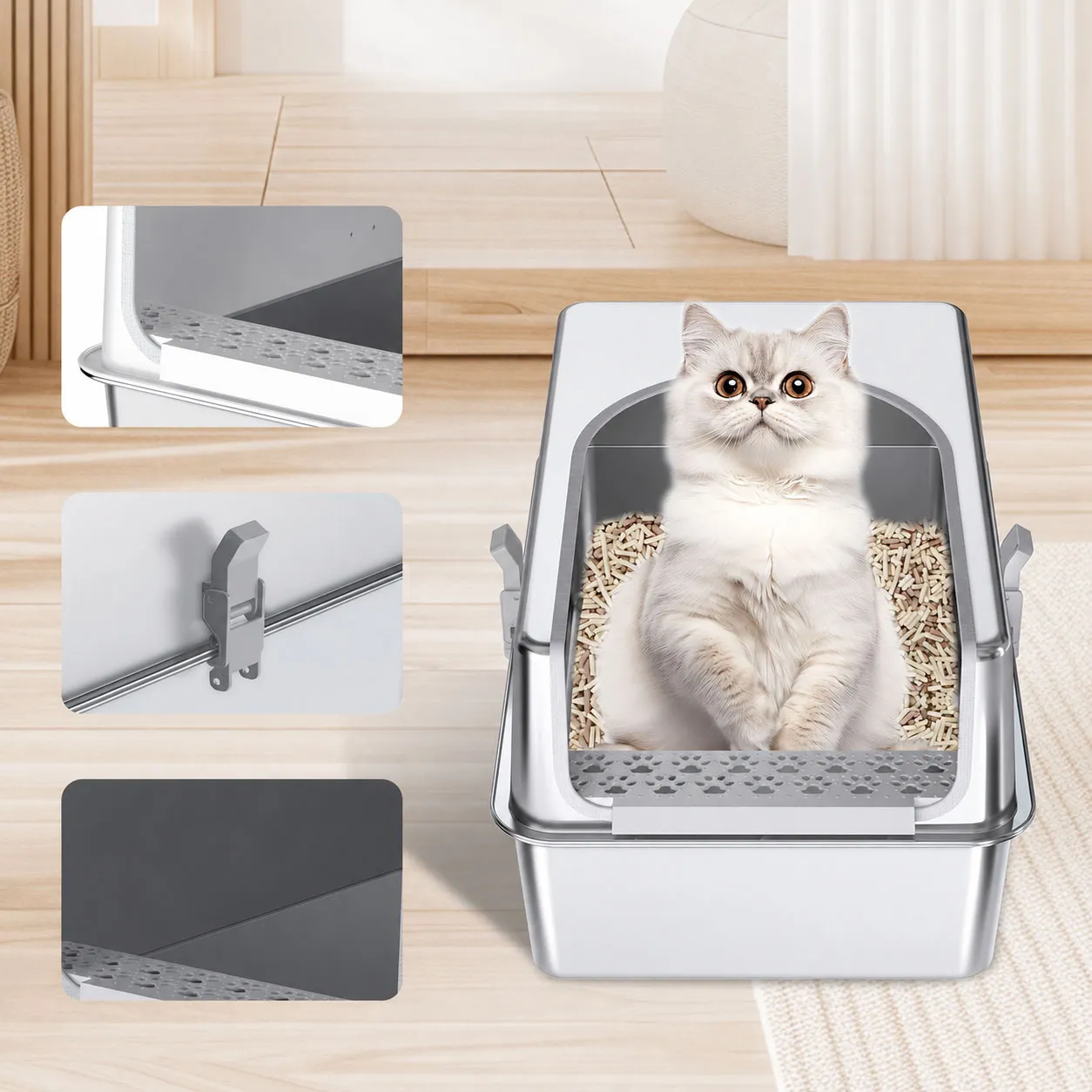
Extra Large High-Side and 65L Enclosed models |
Compared with coated plastic boxes, a stainless box changes the question you ask the supplier. For coated plastic it is how long the coating lasts and how much of the pan it covers. For steel it is which grade, thickness and finish you are getting. Neither question is answered on the listing pages we reviewed.

Test a sample in five steps
This is an internal check we suggest, not an industry standard method.
- Get the material statement in writing. Coating or bare steel, steel grade, sheet thickness and surface finish.
- Order samples. PetNivo’s published OEM reference puts sample production at 7-14 days for customized orders; confirm the timing for standard models.
- Run the clump test. Wet the litter you plan to recommend (water is a rough stand-in for urine), form clumps on the pan floor, leave them for 24 hours, then scrape with the scoop you would sell alongside. Photograph the pan.
- Repeat on the same spot at least 10 times. Compare the last photo with the first.
- Write the claim to match the result.
PetNivo’s stainless litter boxes: what is published
Two models in PetNivo’s litter range fit this comparison. Only what the listings state appears below.
What this means for a listing
On the plus side, if the steel is confirmed bare, there is no applied layer to wear, and the high-side XL gives a defined size to write copy around. PetNivo’s published OEM options (logo, laser engraving, color and material customization, retail packaging) may also apply, though which ones fit these two models needs confirming.
The drawbacks are the ones that change a buying decision. There is no release data. The 65L is stated for cats up to about 10 kg, which narrows who it suits. The XL carries a 20-piece MOQ, and the 65L’s MOQ is unconfirmed. With finish unpublished, how the surface handles scoop marks is unknown until you hold a sample.
Next step: samples and a spec sheet
Request one of each model plus a written material sheet covering coating or bare steel, grade, thickness, finish and, for the 65L, the cover material. Run the five steps above before you write the listing. This article carries no coating wear data and no release data by litter type, because neither is published; your own before-and-after photos will be the only evidence of that kind on your page.
Часто задаваемые вопросы
Q: Is a stainless steel litter box actually non-stick?
A: Not as a guaranteed property. Stainless steel is non-porous, but PetNivo has no published lab data on how well clumps release from its stainless boxes. Run the five-step sample test with your own litter before using the word.
Q: Can a litter box coating wear off?
A: A coating is an applied layer, so it can wear. How fast depends on the coating and on use, and the listings we reviewed publish no wear data. Ask the supplier for coating type, thickness, coated area and test method.
Q: What are the MOQ and price for PetNivo’s stainless litter boxes?
A: The Extra Large High-Side model lists an MOQ of 20 pcs and a website reference price of US$21.3-25. For the 65L Enclosed model, request a quote with your quantity.
Q: Can I private-label these boxes?
A: PetNivo’s published OEM options include logo branding, laser engraving, color and material customization and custom retail packaging. Mass production is generally stated as 30-45 days after sample approval. Confirm which options apply to each model when you request samples.








 10 ноября 2026 г.