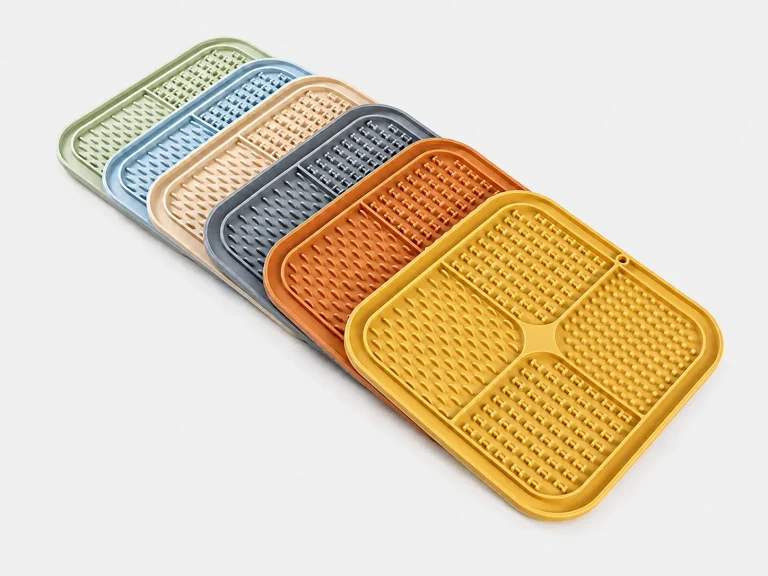
Fast eating, boredom, and stressful care routines can make daily life harder for a cat and its owner. These problems may lead to food waste, rushed meals, or unwanted behavior. A well-designed cat lick mat turns food into a slower, more engaging activity.
Una alfombrilla para lamer es una alfombrilla texturizada que retiene la comida húmeda, el puré o las golosinas blandas en unos surcos poco profundos. Al lamer la superficie, el gato come más despacio y dedica más tiempo a ganarse la comida. La mejor alfombrilla es aquella que sea apta para el contacto con alimentos, estable, fácil de limpiar y adecuada al tamaño y a los hábitos alimenticios del gato.
What Is a Cat Lick Mat, and How Does It Work?
A cat lick mat is a flat or shallow feeding product with grooves, bumps, waves, or small cells across its surface. A cat owner spreads soft cat food or treats over the mat. The animal must then use its tongue to remove the food from the textured areas.
Unlike a normal bowl, a lick mat does not place all the food in one open space. It spreads a small amount across a larger area. This can extend treat time and make the cat work a little harder for each bite. It is a simple idea, but it creates a more active feeding experience.
A mat for cats may be used for:
- Wet food
- Lickable cat treats
- Soft pâté
- Vet-approved purées
- Crushed treats mixed with water
- A small part of a regular meal
- Medication mixed with approved food
A lick mat for cats is not the same as a deep puzzle feeder. It does not require the animal to open doors, move parts, or reach into small spaces. It relies on natural licking and a textured surface instead.
This simple design makes the product easy to introduce. Still, every cat is different. Some begin licking at once. Others may need a small amount of familiar food placed near the edge before they understand what to do.
How Can a Lick Mat Provide Enrichment and Mental Stimulation?
Indoor cats need more than food, water, and a clean litter box. They also need opportunities to explore, play, hunt, scratch, climb, hide, and work for resources. The Feline Veterinary Medical Association’s environmental guidelines explain that meeting these natural needs can support a healthier feline environment.
Food-based enrichment turns eating into an activity. Instead of finishing a soft meal in seconds, the cat must locate and remove food from different parts of the mat. The movement is small, but the task still asks the animal to focus.
A lick mat may help provide mental stimulation by adding:
- New textures
- Different food placement
- A simple problem-solving task
- A longer feeding routine
- A positive activity during quiet periods
The Feline Veterinary Medical Association also recommends feeding programs that encourage natural hunting and foraging behavior. Its feline feeding consensus statement supports the use of feeding methods that allow frequent small meals and more active food-seeking behavior.
Cornell University’s Feline Health Center notes that safe toys can encourage exercise and cognitive enrichment while helping cats perform natural behaviors. A food mat is not a replacement for active play, climbing furniture, scratching posts, or human interaction. Instead, it can become one part of a broader enrichment plan.
Can a Lick Mat Help Slow Down Eating?
A normal bowl allows a cat to take several large bites in quick succession. A textured mat spreads the food into thin layers and small pockets. The cat must lick each area several times, which can slow down eating during mealtime.
Slower feeding may be useful for animals that rush through wet food. It can also make a small pet treat last longer. However, the result depends on the groove pattern, food thickness, serving size, and the individual animal.
How Should Cat Owners Use a Lick Mat Safely?
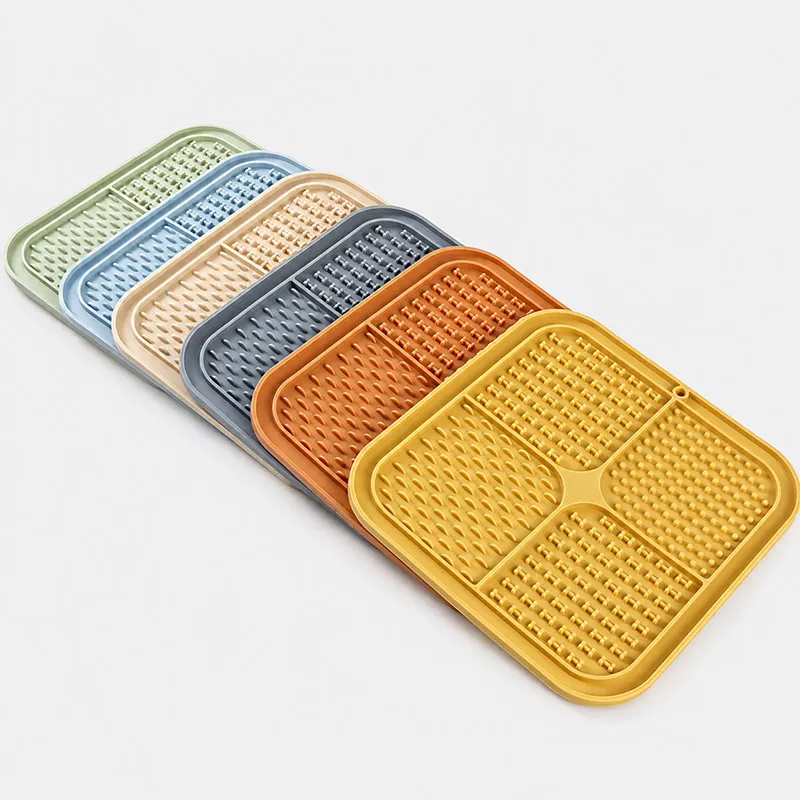
Start with a clean mat and a small amount of familiar food. Spread the food over a few easy-to-reach areas rather than filling every deep groove. Place the product on a flat floor where it cannot slide into furniture or tip over.
The owner should supervise the first few sessions. Some cats may try to bite or pull the mat instead of licking it. Remove the product if the animal chews off pieces, damages the surface, or shows signs of stress.
Safe Introduction Steps
- Wash and dry the mat before first use.
- Add a small amount of familiar cat food.
- Place the food near the outer edge.
- Let the cat investigate without force.
- Keep the first session short.
- Watch for chewing or material damage.
- Remove and clean the mat after use.
- Store it where the animal cannot chew it unattended.
Using a lick mat should create a positive experience. Do not press the cat’s face toward the surface or withhold normal food to force participation. A nervous feline may need several calm introductions.
A cat parent should stop using the product when:
- The mat becomes cracked or torn
- Pieces are missing
- The surface develops a strong odor
- Food cannot be removed from the grooves
- The cat repeatedly chews the material
- The animal appears uncomfortable
- The product moves too much during use
For frozen food, buyers and owners should be careful. A lightly chilled mat may make treat time last longer, but food frozen into a very hard layer may be uncomfortable for animals with dental sensitivity. The serving should never be so cold or hard that it causes pain.
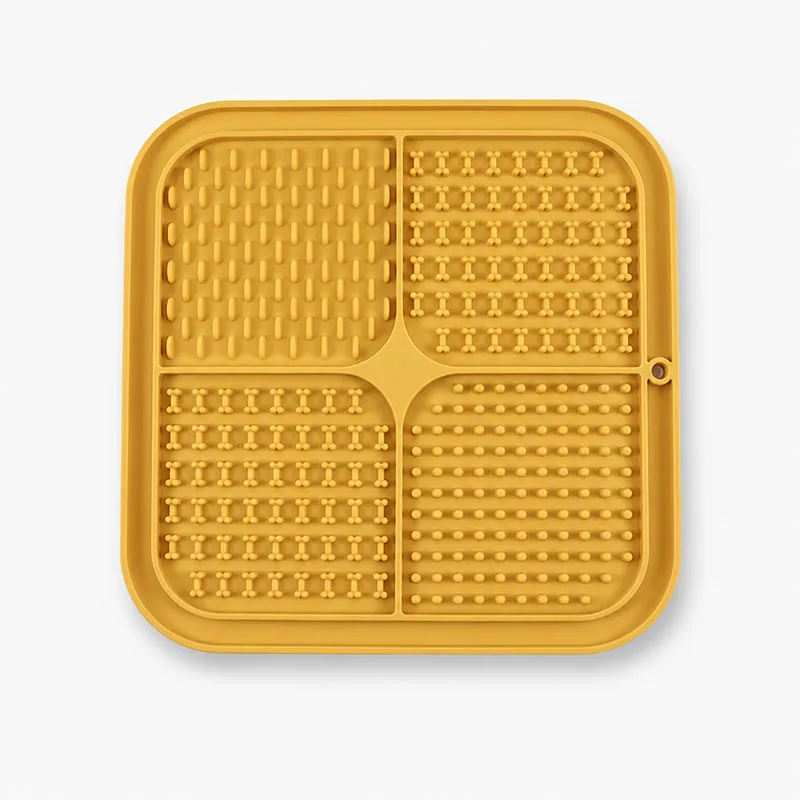
Which Textured Surface Works Best for Cats?
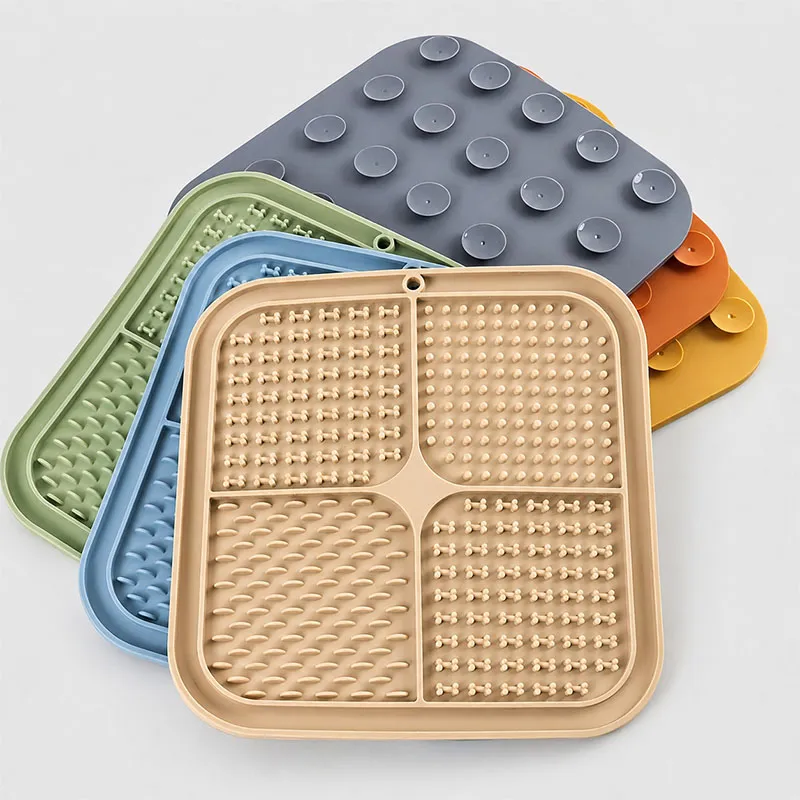
The best design combines shallow details with enough variation to hold food. A cat’s tongue, mouth size, and feeding style differ from those of many dogs. Very deep channels may trap food beyond easy reach and create more cleaning work.
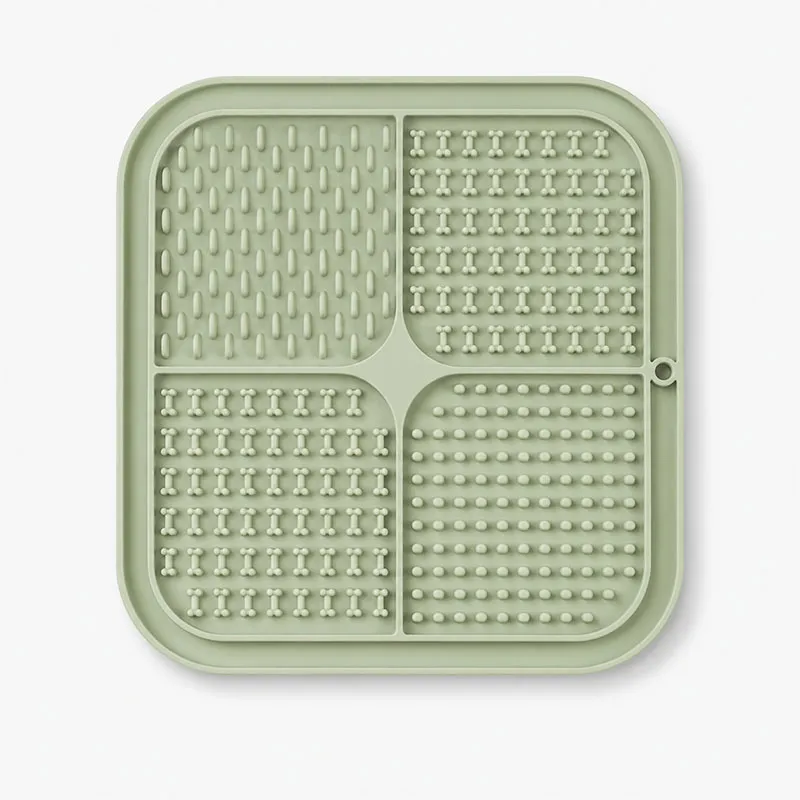
A good textured mat may combine two or three zones:
- Shallow waves for wet food
- Small rounded bumps for soft treats
- Wider cells for pâté
- A smooth edge for easy starting
- A border that helps contain liquid
The pattern should challenge the animal without causing frustration. Small lick mats often work well for treats, medication support, or short grooming sessions. Larger designs may hold part of a full meal.
A raised outer rim helps keep soft pet food on the product. However, a rim that is too high may block access for a small kitten or flat-faced breed.
The back surface matters too. Suction cups can reduce movement on tile, glass, or other smooth floors. They may work less effectively on textured wood, carpet, or uneven surfaces. Buyers should test suction performance on several common household surfaces rather than relying on one demonstration.
Is a Silicone Lick Mat the Best Material?
Silicone is common because it can be flexible, quiet, lightweight, and easy to mold into detailed shapes. A silicone lick mat can also roll or bend for compact storage.
However, the word “silicone” alone does not prove quality. B2B buyers should ask what material grade is used, whether the colorants are suitable for the intended application, and which food-contact tests apply in the destination market.
Important silicone product checks include:
- Material composition
- Odor before and after washing
- Resistance to tearing
- Color consistency
- Surface smoothness
- Suction-cup strength
- Heat and cold performance
- Food-contact test documentation
- Labeling for the target market
- Cleaning instructions
What Should B2B Buyers Check Before Ordering Lick Mats?
Retail success depends on more than an attractive shape. A product must be safe to use, easy to clean, simple to pack, and strong enough to survive shipping and daily handling.
At PetNivo Tech, we recommend checking the following areas before approving bulk production.
Product Design
- Overall length, width, and thickness
- Size of the usable feeding area
- Depth of each texture
- Outer-rim height
- Suction-cup layout
- Flexibility and tear resistance
- Suitability for wet food and treats
Material and Testing
- Silicone grade and composition
- Applicable food-contact reports
- Odor testing
- Colorant documentation
- Temperature resistance
- Migration testing when required
- Compliance documents for the destination market
User Experience
- Does the mat remain stable?
- Can a cat reach food in every groove?
- Does the rim contain liquid?
- Can the product be cleaned with a normal brush?
- Does the mat dry quickly?
- Does the texture suit cats rather than only dogs?
Packaging and Private Label
- Logo embossing or debossing
- Colores personalizados
- Printed sleeves
- Retail cartons
- Hanging packaging
- Barcode and SKU labels
- Multilingual instructions
- Safety warnings
- Feeding and cleaning guidance
Quality Control
- Dimensiones
- Product weight
- Color consistency
- Flashing around molded edges
- Tears or thin areas
- Strong chemical odor
- Dirty surfaces
- Warping
- Suction performance
- Packaging condition
How Can Retailers Build an OEM Cat Lick Mat Range?
A strong retail range does not need ten nearly identical products. It needs clear choices for different uses.
A practical collection may include:
- Small treat mat: Compact size for snacks and medication support.
- Standard cat lick mat: Shallow mixed textures for everyday enrichment.
- Slow-feeding mat: Larger surface for part of a wet meal.
- Grooming mat: Strong suction for use during brushing or nail care.
- Dual pet mat: Medium-size option for cats and small dogs.
- Gift set: Lick mat, food scoop, storage bag, and care guide.
Illustrative B2B Case Study
Consider an e-commerce pet brand that already sells bowls and water dispensers. The company wants to expand into nutritious pet enrichment without adding a complex electronic product.
The brand introduces three coordinated items:
- A small lick mat for treat time
- A full-size food mat for wet meals
- A two-piece set for multi-pet households
PetNivo helps the buyer compare texture designs, select suitable materials, review samples, customize packaging, and combine the products with existing feeding accessories.
The buyer then creates three price levels instead of relying on one product. Matching colors and packaging connect the collection. Clear use instructions reduce customer confusion. A practical accessory becomes a complete feeding and enrichment range.
How Does PetNivo Tech Support OEM and Private-Label Lick Mat Projects?
PetNivo Tech is a China-based B2B pet supplies sourcing and OEM/private-label partner. We work with global pet retailers, importers, distributors, e-commerce sellers, and private-label brands.
Our support for cat lick mat projects can include:
- Product and supplier research
- Existing mold selection
- Custom texture development
- Material and test-report review
- Color matching
- Logo customization
- Sample comparison
- Packaging design coordination
- Pre-production confirmation
- Quality-control inspection
- Carton and loading review
- Export coordination
We do not treat sourcing as a simple product search. We compare the product’s material, texture, size, cleaning needs, packaging, price position, and target customer.
PetNivo also helps buyers connect lick mats with related pet product categories, including:
- Feeding bowls
- Slow feeders
- Smart feeders
- Water dispensers
- Pet food storage products
- Cat furniture
- Scratching products
- Beds
- Carriers
- Litter solutions
- Dog crates
- Bird cages
This supply-chain integration helps buyers build a broader product range through one coordinated sourcing partner.
For private-label development, we can help you choose between an existing mold and a custom design. Existing molds usually reduce development cost and lead time. A custom mold gives greater control over size, texture, branding, and product positioning.
The right choice depends on your order quantity, target price, sales channel, and launch schedule.
Preguntas frecuentes
Are lick mats good for cats?
A lick mat can be a useful feeding and enrichment accessory when it is used safely. It gives the cat a simple food-based activity and may extend the time needed to eat soft food. It should complement active play, climbing, scratching, and other forms of mental and physical stimulation.
What can I put on a cat lick mat?
Use familiar wet cat food, soft pâté, lickable cat treats, or another veterinarian-approved food. Avoid random human foods and ingredients that may be toxic to cats. Measure the portion before spreading it on the surface.
Can a lick mat help a cat eat more slowly?
Yes. Spreading soft food across textured areas usually requires more tongue movements than eating from a normal bowl. This may slow the meal, although results differ between animals and product designs.
Can I leave my cat alone with a silicone lick mat?
It is safer to supervise use, especially during the first sessions. Some animals may bite, tear, or carry the mat. Remove it after the food is finished and store it outside the pet’s reach.
How often should I wash a lick mat?
Wash and dry it after every use, especially when it holds wet cat food. Food can remain in grooves and spoil if the product is not cleaned properly.
Can I freeze wet food on a lick mat?
A lightly chilled or partly frozen layer may extend treat time, but very hard or cold food may not suit every animal. Avoid freezing large, thick portions, particularly for cats with dental sensitivity. Ask a veterinarian when the pet has dental or medical concerns.
Can the same mat be used for a cat and a small dog?
It can, provided the size, texture, and strength suit both animals. Separate mats are often better for hygiene, portion control, and multi-pet feeding.
Is every silicone mat dishwasher safe?
No. Dishwasher performance depends on the silicone, colorants, printing, bonded parts, and manufacturing process. Follow the product instructions and confirm dishwasher testing before making that claim on retail packaging.







 July 20, 2026