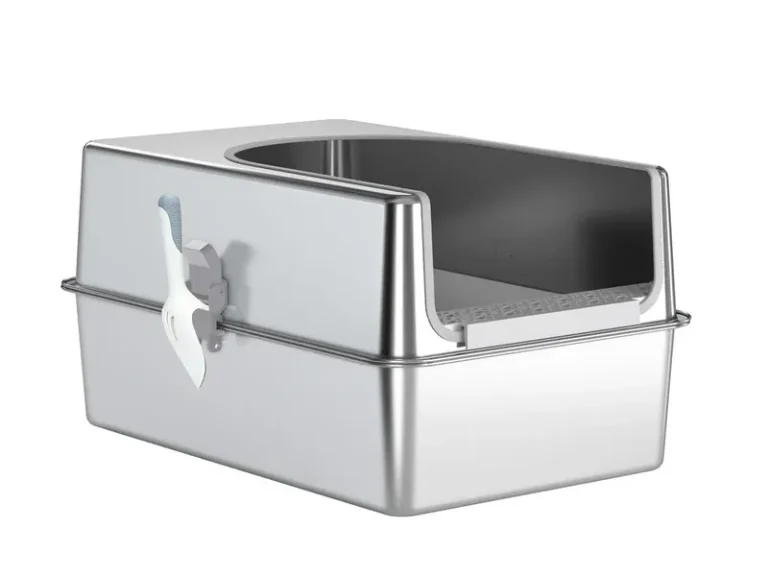
Small litter boxes force large cats to crouch, step on waste, and kick litter across the floor. The result is mess, odor, and box avoidance. A well-sized, high-sided design gives the animal room to turn, dig, and exit comfortably while making daily cleaning easier for the owner.
La mejor bandeja sanitaria para gatos grandes debe medir aproximadamente 1,5 veces la longitud de la mascota desde la nariz hasta la base de la cola, ser lo suficientemente ancha como para que pueda dar una vuelta completa y fácil de acceder. Una bandeja de acero inoxidable lisa, con bordes altos, esquinas redondeadas, una tapa extraíble y una pala a juego puede ofrecer mayor durabilidad, una limpieza más sencilla y un mejor control de la arena.
What Makes an Extra-Large Litter Box Better for Big Cats?
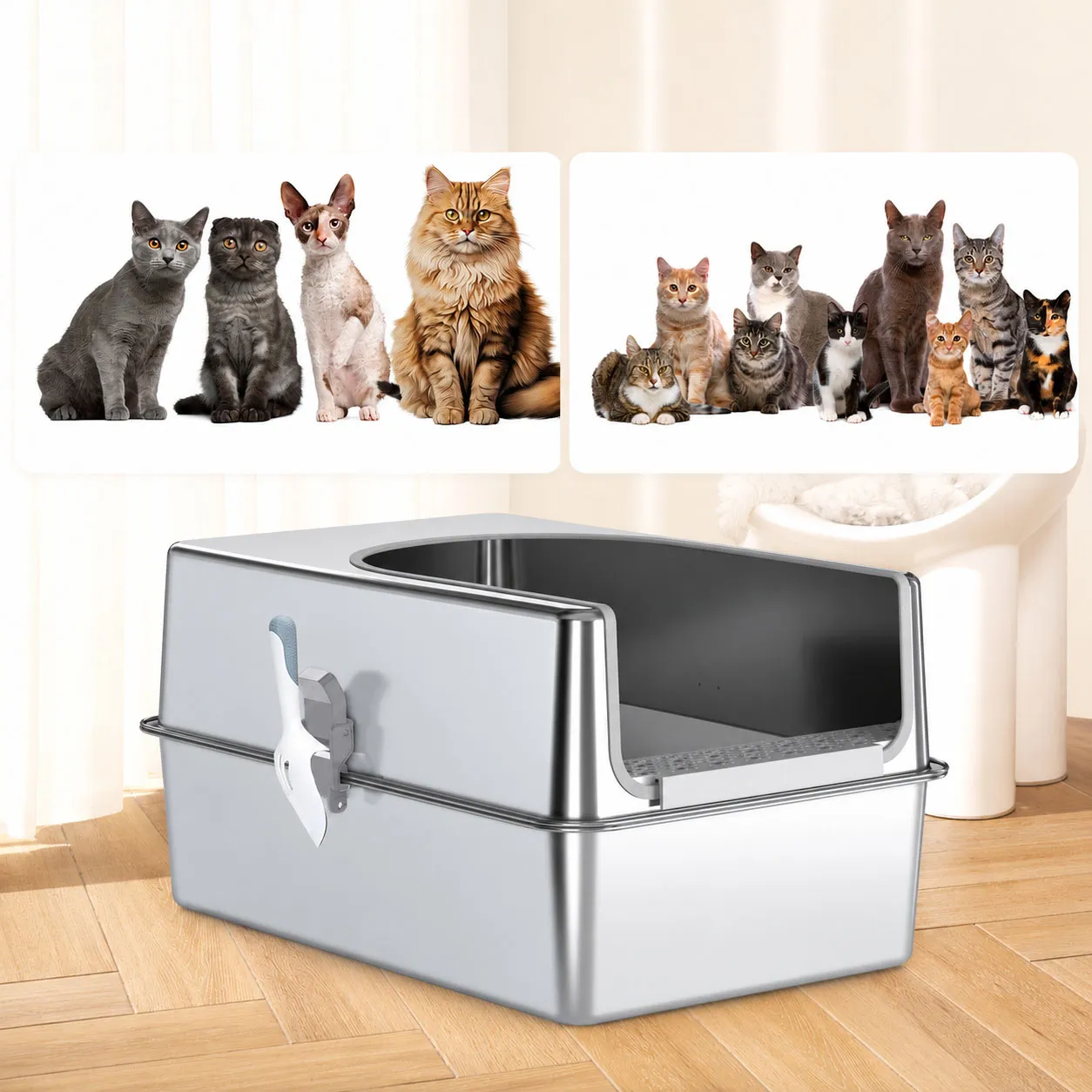
A bigger box gives a feline enough room to enter, turn around, dig, squat, and cover waste without touching the walls. This matters for Maine Coons, Ragdolls, Norwegian Forest Cats, British Shorthairs, overweight pets, and multi-cat households. A standard cat pan may look acceptable on a shelf, yet feel cramped once litter is added.
Veterinary guidance often recommends a box length equal to approximately 1.5 times the animal’s body length, measured from the nose to the base of the tail. The Feline Veterinary Medical Association also notes that many commercial products are too small.
For retailers, the term extra-large litter box should mean more than a large exterior shell. Buyers should evaluate the usable internal area. Thick walls, sloped corners, oversized rims, and bulky hood structures can reduce the actual standing space.
A good box for big cats should provide:
- Enough internal length for a full body turn
- Adequate width for digging and covering
- High walls without an uncomfortable entrance
- A stable base that does not tip or flex
- Smooth corners that do not trap wet litter
- Space for a practical layer of cat litter
Is a Stainless Steel Cat Litter Box Better Than a Plastic Litter Box?
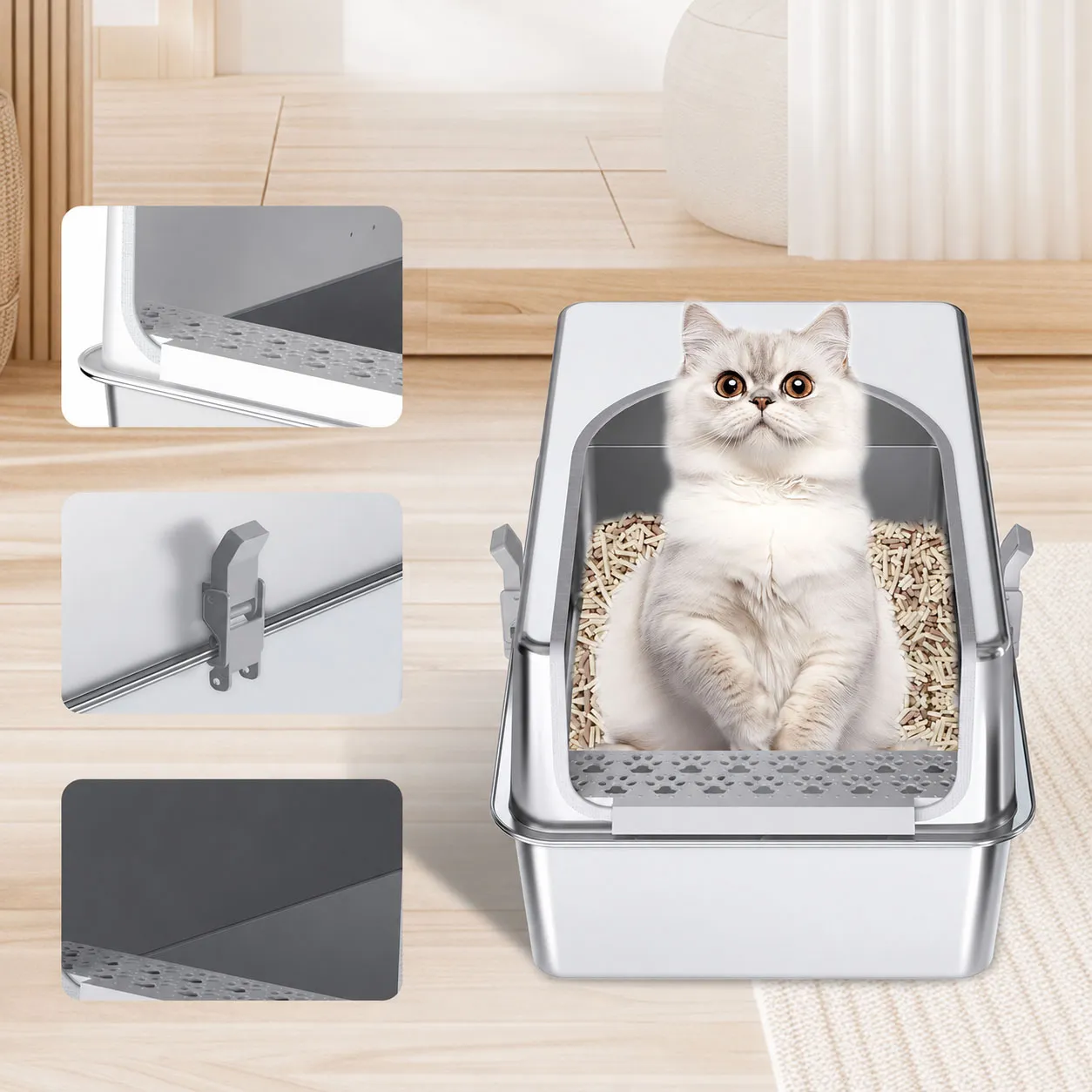
A stainless steel cat litter box can offer clear advantages in durability and cleaning. Its smooth surface does not depend on a painted internal coating, and a well-finished metal pan is resistant to moisture, regular washing, and daily scraping.
Stainless steel is widely used in hygiene-focused applications because properly finished surfaces can be smooth, durable, corrosion-resistant, nonabsorbent, and easy to clean. These general material properties make it a practical choice for pet-care products that face regular moisture and waste exposure.
A plastic litter box usually costs less and is lighter to ship. However, lower-grade plastic can flex under the weight of a large volume of litter. Over time, aggressive scraping may also create surface marks. These scratches can make complete cleaning more difficult.
Not every metal product performs equally. A large stainless steel litter box should have rolled or polished edges, consistent wall thickness, smooth welds, stable feet, and corners without sharp transitions. Thin material may bend, while rough seams can catch litter or make cleaning harder.
A large stainless steel model also needs suitable packaging. Steel may resist daily use, yet its visible surface can be scratched during transport if separators, films, or molded protection are missing.
Should You Choose an Open Top Litter Pan or Enclosed Cat Litter Box?
An open top litter pan gives the animal a clear view of the room and several possible exit directions. It is simple, spacious, and easy for the owner to inspect. It can also suit older pets because there is no door or narrow covered entrance.
An enclosed cat litter box offers more visual privacy and may reduce the amount of litter kicked directly onto the floor. However, the cover must not make the interior feel cramped. Poor ventilation or a low roof can create an unpleasant experience, especially for a large cat.
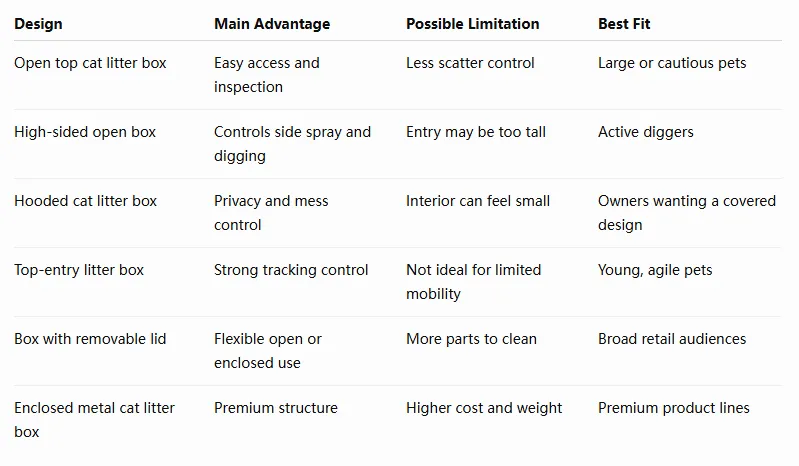
A litter box with removable lid gives retailers a useful middle option. Owners can start with an open configuration and add the cover later. The lid also makes shipping and storage easier when it nests securely over the pan.
Searches for a covered cat litter box, jumbo hooded cat litter box, or enclosed stainless steel cat litter product often reflect the same customer need: less mess without reducing comfort. Product development should therefore focus on internal space, airflow, entrance size, and simple assembly—not only the appearance of the hood.
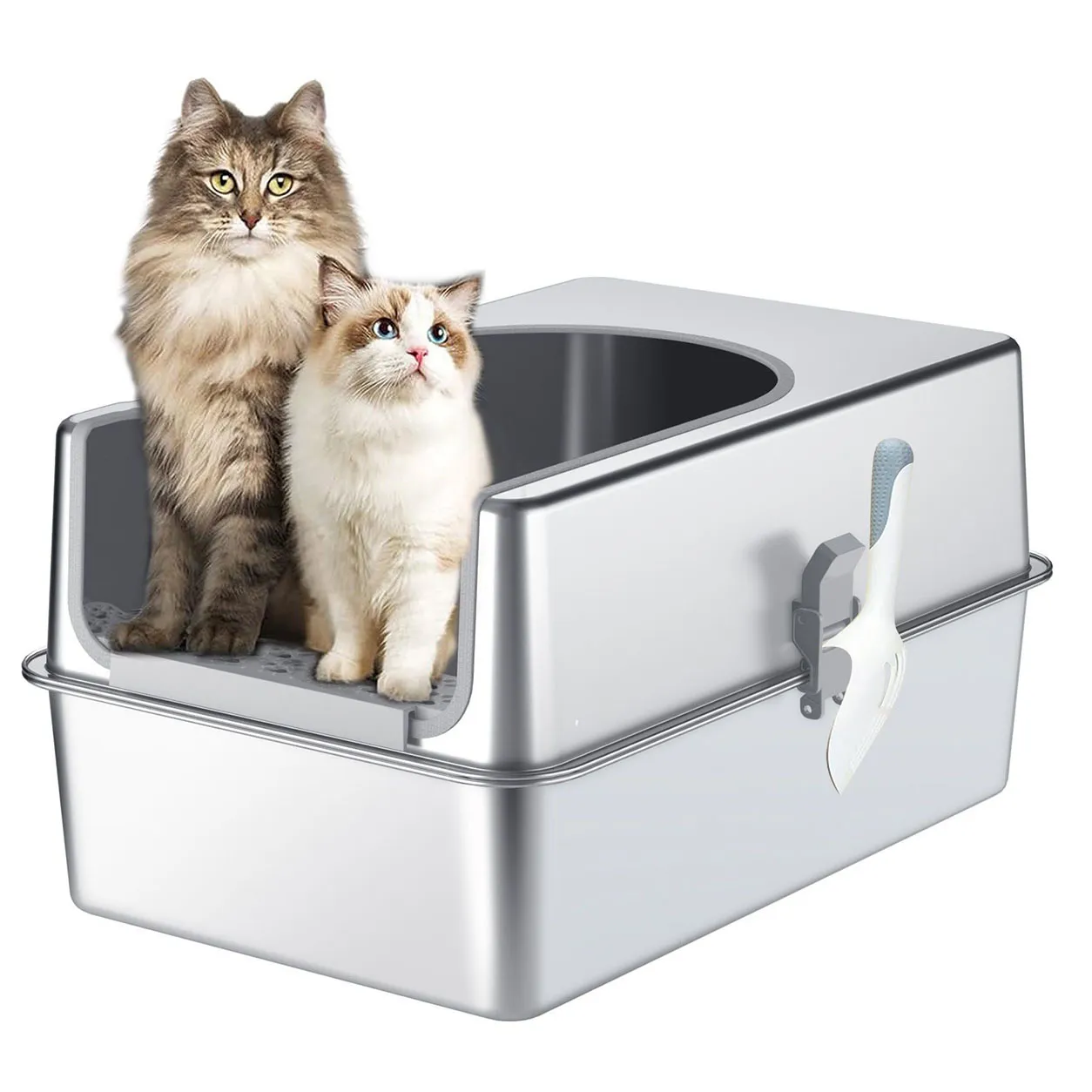
Why Do High Sides and a Removable Lid Matter?
A litter box with high sides helps contain material when an animal digs strongly or urinates near the wall. Taller rear and side panels can reduce litter scatter without fully enclosing the interior.
The entry should remain lower than the surrounding walls. This creates a balance between access and containment. A poorly designed box with high walls on every side may be difficult for kittens, senior pets, or animals recovering from surgery.
Useful high-sided cat litter features include:
- A lowered front entrance
- Taller rear protection
- Rounded internal transitions
- A detachable splash guard
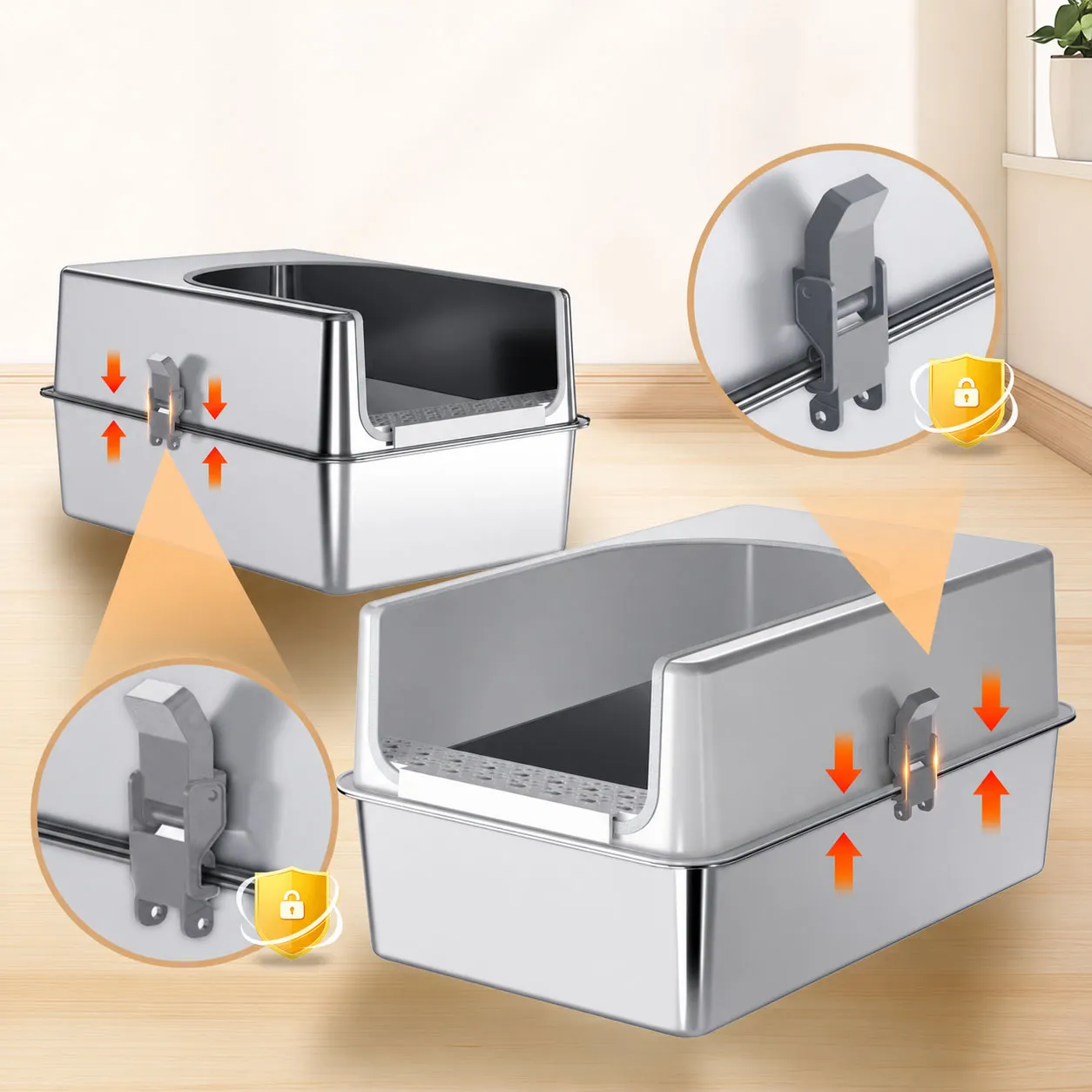
- Secure lid clips
- No exposed sharp edges
- A wide entry that does not restrict movement
- An overlap between the lid and base to prevent leakage
A steel litter box with lid may use a metal base and a molded upper cover. This hybrid construction keeps the waste-contact area durable while allowing more color, handle, and styling options.
For private-label buyers, a removable top also creates more SKU possibilities. The same base can support an open version, a high-guard version, and a covered version. That reduces tooling complexity while giving distributors several price points.
Which Litter Box Features Make Cleaning Easier?
Cleaning begins with shape. A product with deep square corners may look space-efficient, but wet litter can stick in those corners. Large-radius corners make scooping and washing easier.
The internal surface should be smooth and free from deep logos, decorative textures, open joints, or exposed fasteners. These details may appear minor during product photography, yet they strongly affect daily use.
The most practical cat litter box features include:
- Rounded internal corners: Reduce trapped residue.
- Smooth inner walls: Make scooping and wiping easier.
- Stable bottom: Prevent movement during digging.
- Removable parts: Allow complete washing.
- Comfortable handles: Help owners empty the pan.
- Compatible scoop: Fits the corner shape.
- Replaceable filters: Useful for covered models.
- Protective feet: Reduce floor scratching and noise.
Owners should remove waste at least daily. Guidance from the ASPCA also recommends regular washing with warm water and mild, unscented cleaning products while avoiding strong fragrances that may cause box aversion.
An easy cleaning kitty cat box should not depend on an unrealistic “self-cleaning” message unless it contains a tested automatic system. Clear claims such as “smooth interior,” “rounded corners,” and “removable splash guard” are more useful and easier for buyers to verify.
What Should B2B Buyers Check Before Ordering Metal Litter Boxes?
A product sample should be inspected as a complete user experience. Checking only the material certificate is not enough. The buyer should test stability, edges, internal finish, assembly, cleaning, packaging, and accessory fit.
At PetNivo Tech, we recommend reviewing the following points before bulk production:
Material and Construction
- Confirm the requested steel grade and sheet thickness.
- Check whether the pan bends under realistic litter weight.
- Inspect corners, rims, welds, and folded edges.
- Confirm that there are no burrs or sharp points.
- Review resistance to routine washing and household moisture.
Functional Size
- Record both external and internal measurements.
- Measure the lowest entry point.
- Confirm the rear and side wall height.
- Test whether a large animal can turn comfortably.
- Check that the lid does not reduce headroom.
Cleaning and Daily Use
- Test the scoop in every corner.
- Look for areas that trap wet material.
- Wash and dry the product several times.
- Check whether labels leave adhesive residue.
- Review whether feet or pads can be removed.
Packaging and Export
- Protect visible metal surfaces from scratches.
- Prevent lids and accessories from moving inside the carton.
- Conduct drop and vibration tests when required.
- Confirm carton markings, barcode position, and manual language.
- Calculate container loading before finalizing the retail box.
The lowest quotation is not always the lowest total cost. A cheaper pan that arrives scratched, flexes under weight, or receives poor reviews may create returns, replacements, and damaged brand trust.
How Does PetNivo Tech Support Large Litter Box Sourcing?
PetNivo Tech helps pet retailers, distributors, importers, e-commerce sellers, and private-label brands source market-ready dog, bird, and feline products from China.
For litter solutions, our work can cover:
- Product research and supplier matching
- Open, high-sided, covered, and metal designs
- Sample comparison
- Dimension and feature review
- Material and workmanship checks
- Logo and packaging customization
- Accessory bundle development
- Quality-control coordination
- Carton and container-loading optimization
- Export document and shipment coordination
We also help buyers connect litter products with related categories, including carriers, feeding products, beds, stairs, cat furniture, scratching products, smart feeders, and water dispensers. This allows an importer to develop a broader category while working through one coordinated sourcing channel.
Our goal is not simply to offer another cat litter box for cats. We help the buyer choose a product position, reduce quality risks, plan private-label details, and create a commercially sensible range.
Preguntas frecuentes
What size litter box is best for a large cat?
Choose a box with an internal length of approximately 1.5 times the animal’s nose-to-tail-base length. It should also be wide enough for a complete turn. Large breeds often need more usable floor space than standard commercial litter boxes provide.
Is an extra large cat litter box suitable for two cats?
Two animals may use the same product, but sharing should not be the only option. A widely used guideline is one box per animal plus one extra, placed in different accessible locations.
Are metal litter boxes better for controlling odors?
A smooth metal litter surface is easy to wash and does not rely on a porous coating. However, the product cannot control odor without frequent scooping, suitable litter, and regular cleaning. Retailers should avoid absolute “odor-free” claims.
Does a stainless steel litter box rust?
A properly selected and finished grade offers good corrosion resistance, but no material is completely maintenance-free in every environment. Buyers should verify the steel grade, surface finish, seams, manufacturing quality, and cleaning instructions.
Is a covered box better than an open box?
Not always. A covered model can reduce visible mess and offer privacy, while an open cat litter design provides more airflow, space, and exit visibility. A removable cover lets the owner test both arrangements.
How high should the sides be?
The side and rear walls should be high enough to contain digging and side spray, while the front opening remains easy to cross. The correct entry height depends on whether the intended users are healthy adults, kittens, seniors, or animals with reduced mobility.
How often should owners clean litter boxes?
Waste should be removed at least once daily. The complete cleaning schedule depends on the litter type, number of users, and product design. Mild, unscented cleaning products are generally preferred over strong fragrances or ammonia-based cleaners.
Final Buying Checklist
Before placing a wholesale order, confirm:
- Internal length and width
- Entry height
- Side and rear wall height
- Steel grade or plastic specification
- Material thickness
- Edge and corner finish
- Base stability
- Lid fit and ventilation
- Scoop and mat compatibility
- Cleaning instructions
- Logo method
- Retail packaging
- Drop-test requirements
- Carton dimensions
- Container-loading quantity
- Quality-inspection standard
A successful large cat litter box is not simply oversized. It combines usable space, safe access, strong construction, simple cleaning, and practical mess control.
For importers and private-label brands, PetNivo Tech can help turn those requirements into a coordinated sourcing program—from sample selection and customization to quality control, packaging, and export delivery.
Póngase en contacto con PetNivo Tech to discuss large litter boxes, stainless steel models, custom accessories, private-label packaging, and wholesale product-line development.







 July 20, 2026