Worn scratching posts reduce product value and may frustrate cat owners, but replacing the entire cat tree is often unnecessary and costly.
DIY cat scratcher rope can be used to build new scratching posts or repair worn cat furniture. An 8mm sisal rope offers a practical balance of coverage, grip, flexibility, and visual texture for cat scratching posts, cat trees, and replaceable scratching components.
For retailers and pet product buyers, sisal rope is more than a simple repair material. It can support DIY kits, replacement accessories, cat furniture production, private-label packaging, and after-sales product solutions.
How to Make a DIY Cat Scratching Post with 8mm Sisal Rope?
A poorly wrapped post can loosen quickly, expose gaps, and create an unattractive result that customers may not trust or continue using.
To make a DIY cat scratching post, secure one end of the 8mm sisal rope, wrap it tightly around a stable post, keep each row close together, and secure the final end without leaving sharp or loose parts exposed.
A basic DIY cat scratching post usually needs a stable base, a vertical post, suitable sisal rope, and a secure fixing method. The post should remain steady when a cat stretches, scratches, or leans against it. A weak base can make the finished product unstable even when the rope is wrapped correctly.
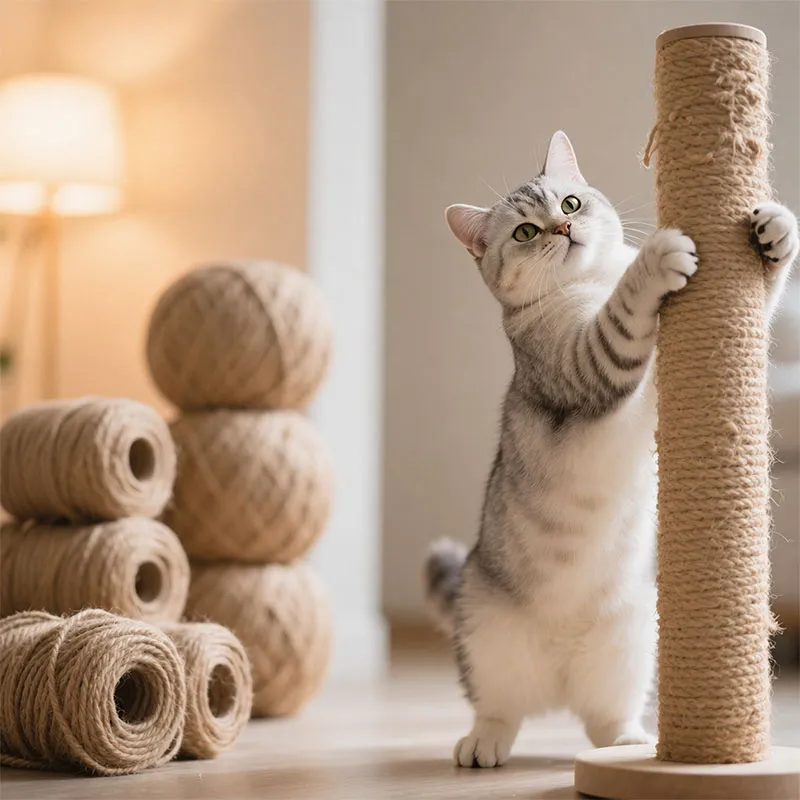
The wrapping process should begin at the bottom of the post. The first section must be fixed firmly because it supports the rest of the rope. The installer should then wrap the rope upward while applying even tension. Each row should sit closely against the previous row.
Visible gaps reduce the quality of the finished scratching surface. Loose sections can also move during use. Consistent wrapping creates a more professional appearance and provides an even scratching area.
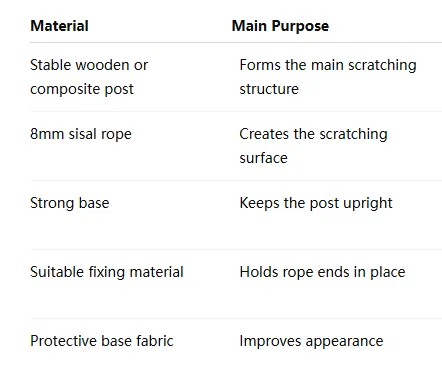
The installer should keep staples, nails, or other fasteners away from the main scratching surface. Any fixing point should remain covered and secure. Glue may also be used in suitable applications, but the selected adhesive should match the material and intended pet product use.
For commercial buyers, a DIY cat scratching post can be sold as a complete kit or as separate replacement materials. A kit may include pre-cut sisal rope, a post, assembly instructions, and basic accessories. This format can work for online pet supplies stores because customers receive a clear project rather than an undefined raw material.
Retailers should provide accurate rope length, diameter, and application guidance. These details help customers choose enough rope for their project and reduce complaints caused by incorrect expectations.
PetNivo Tech can help buyers source cat scratcher materials, finished cat scratching products, and related pet furniture for wholesale, retail, and private-label product lines.
What Is the Best Sisal Rope for a DIY Cat Scratching Post and Cat Tree Repair?
Rope may look similar in product photos, but differences in diameter, texture, consistency, and packaging can affect installation and customer satisfaction.
The best sisal rope for a DIY cat scratching post should have a consistent diameter, firm natural texture, stable twisting, low visible contamination, and enough length to cover the intended post without unnecessary joints.
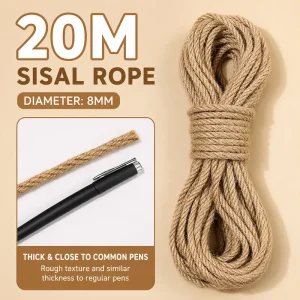
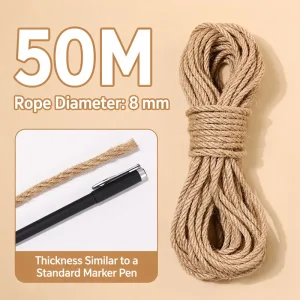
Sisal rope is widely selected for cat scratching surfaces because its rough texture gives cats a clear area to scratch. However, Buyers should not evaluate the product only by the word “sisal.” The actual rope structure and consistency also matter.
Diameter is one of the first points to compare. Thin rope creates more rows and takes longer to install. Very thick rope may be harder to wrap around small posts. An 8mm sisal rope offers a practical middle option for many DIY cat scratcher and cat tree repair projects.
The rope should maintain a reasonably consistent thickness throughout the roll. Large changes in diameter can create uneven rows and an irregular finished surface. The twist should also remain stable during handling and wrapping.
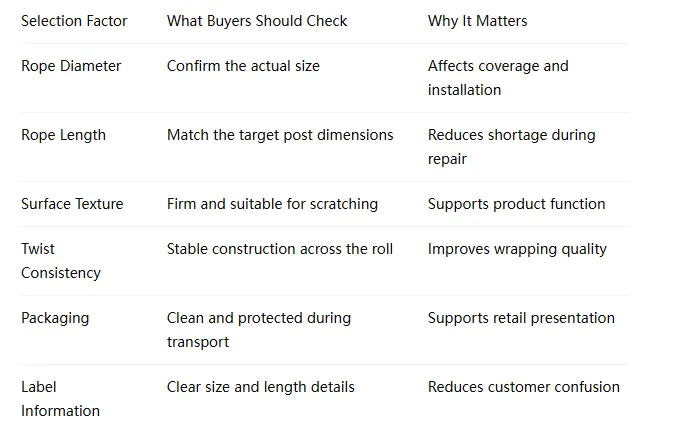
Retail buyers should ask whether the rope is supplied by weight, length, roll size, or package quantity. These sales units are not always interchangeable. A heavier roll does not automatically provide the same usable length if the rope diameter or density differs.
Color should also be evaluated. Natural sisal rope may show some variation because of the material’s appearance. However, large differences between samples and bulk orders can affect private-label packaging and online product photos.
Buyers should request samples before placing a large order. A sample allows the sourcing team to test wrapping performance, surface appearance, rope strength, and packaging. The sample can also help the buyer calculate how much rope is needed for one scratching post.
For Amazon sellers and e-commerce brands, the product page should state the rope diameter, approximate length, main application, and package contents clearly. Good information reduces avoidable returns and helps customers plan their DIY project.
How Do You Replace Cat Scratching Post Rope?
Replacing scratching rope seems simple, but poor removal, uneven wrapping, and exposed fasteners can reduce the safety and appearance of the repaired cat tree.
To replace cat scratching post rope, remove the worn material, clean the post, inspect the structure, secure the new sisal rope at the base, wrap it tightly in even rows, and fix the final end securely.
The first step is to inspect the complete scratching post. The user should not place new rope over a badly damaged or unstable structure. The post, base, and connection points should still be strong enough for continued use.
The old rope should then be removed carefully. Leftover fibers, loose adhesive, and exposed fasteners should be cleared from the post. A clean surface helps the new rope sit evenly and reduces bumps under the finished layer.
The new rope should start from a secure point near the bottom. The installer should wrap the rope under steady tension while pressing each new row against the previous one. Loose wrapping may move or separate after repeated scratching.
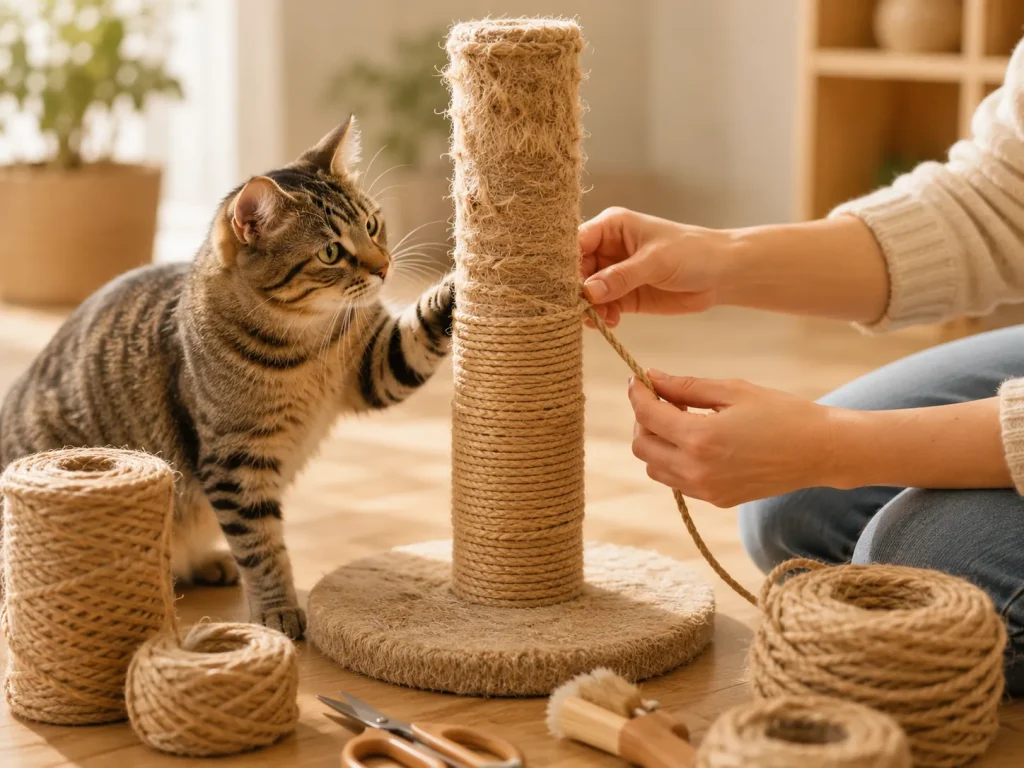
Simple Replacement Process
- Check the post and base for structural damage.
- Remove the worn rope and old loose fibers.
- Clean the post surface.
- Measure the area that needs new rope.
- Secure the first end near the base.
- Wrap the 8mm sisal rope tightly.
- Keep each row close to the next row.
- Secure and cover the final end.
- Inspect the finished post before use.
Accurate measurement is important because rope requirements change with the post diameter, post height, and rope thickness. Buyers selling DIY repair rope should avoid promising one universal coverage amount for every cat tree.
A product listing can provide calculation guidance, but it should also remind customers to measure their own post. Some cat trees use several short scratching sections, while others have one tall post. The required rope length can differ greatly.
From a B2B perspective, replacement rope creates an additional product opportunity. Retailers can sell it beside cat trees, cat scratcher beds, cardboard cat scratchers, and cat tree replacement parts. This gives customers a lower-cost way to extend the useful life of existing pet furniture.
Private-label brands can also package the rope as a cat scratching post repair kit. The kit may include measured rope, basic instructions, gloves, or selected installation accessories. Buyers should confirm the final package contents and safety information before production.
PetNivo Tech supports mixed product sourcing, so buyers can combine sisal rope, cat scratchers, cat furniture, and related pet supplies in a broader sourcing plan.
Why Is 8mm Sisal Rope a Practical Choice for DIY Pet Furniture?
Choosing the wrong diameter can increase wrapping time, create uneven coverage, or make a rope unsuitable for the post size and target retail application.
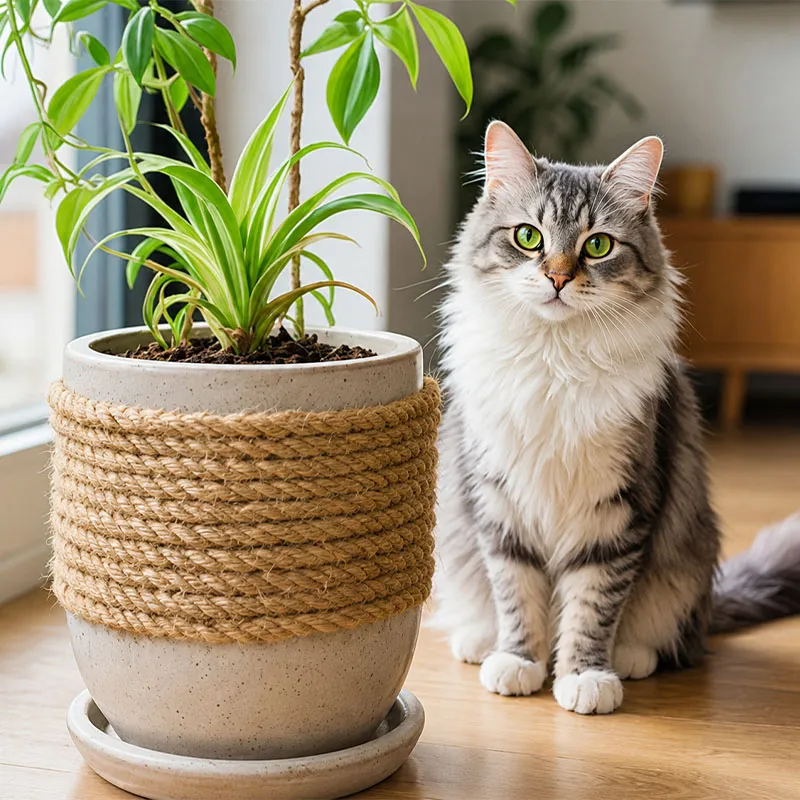
An 8mm sisal rope is practical for DIY pet furniture because it offers visible texture, manageable flexibility, efficient surface coverage, and compatibility with many common cat scratching post and cat tree repair projects.
An 8mm diameter provides a useful balance between thin craft rope and much thicker rope. It can cover a post with fewer rows than a thinner option, but it usually remains flexible enough to wrap around common scratching post shapes.
This balance matters for both individual DIY users and commercial product developers. Faster coverage can reduce assembly time when the rope is used in finished cat furniture production. It can also make the repair process easier to understand for consumers.
The visible rope texture can support the natural look that many cat furniture brands use. Natural-style pet products often combine sisal rope with wood, particleboard, plush fabric, felt, or neutral-colored textiles.
The diameter should always be confirmed before a buyer places a bulk order. Product images alone cannot show exact thickness. Buyers should ask for specifications and test samples.
The rope length per roll is also important for commercial planning. Retailers may prefer several package sizes. A small roll can target simple repairs, while a longer roll can support full post replacement or DIY furniture projects.
Packaging should protect the rope from dirt and moisture during storage and transport. The label should show the rope diameter, length, material description, main use, and any necessary warnings or instructions.
For online sellers, product images can show the rope beside a ruler, wrapped around a sample post, and inside the final retail package. These images help buyers understand the size and intended use.
PetNivo Tech can support buyers with wholesale pet supplies sourcing, product selection, packaging communication, and private-label planning. We help buyers evaluate how one product can fit into a larger cat furniture and cat enrichment category.
What DIY Cat Tree Scratching Post Ideas Work for Retail and Private-Label Buyers?
A generic rope roll may compete mainly on price, but clear product concepts can create stronger differentiation and better retail presentation.
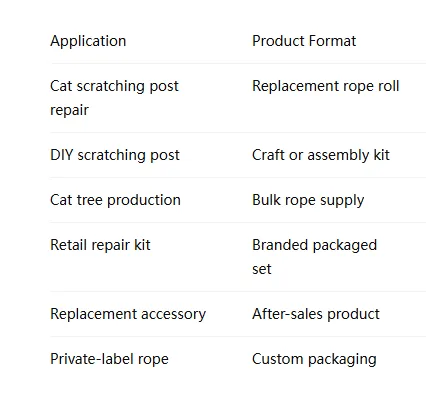
Retail and private-label buyers can use sisal rope in repair kits, modular scratching posts, wall-mounted scratchers, replacement cat tree columns, compact DIY kits, and coordinated cat furniture collections.
Private-label development should begin with a clear customer problem. A customer may need to repair a worn cat tree, build a compact scratching post, replace one damaged column, or create a custom cat activity area.
Each problem can become a different product concept. A simple roll of DIY cat scratcher rope may suit experienced users. A complete kit can suit customers who want clear instructions and measured components.
Product Ideas for Buyers
Cat Scratching Post Repair Kit
This kit can include 8mm sisal rope, installation guidance, and selected accessories. The packaging should state the rope length and explain that coverage depends on post dimensions.
Replacement Cat Tree Column
A ready-wrapped replacement column can reduce the amount of work required by the customer. Buyers must confirm connection sizes and compatibility before marketing this product.
Compact DIY Scratcher Kit
A flat-packed kit can include a base, vertical post, rope, and hardware. This format may work for e-commerce because the package can be designed around shipping size and assembly convenience.
Wall-Mounted Scratching Board
Sisal rope can be wrapped around a suitable board or frame to create a vertical scratching surface. The design should include secure mounting instructions.
Modular Cat Furniture Collection
Private-label brands can combine rope-wrapped posts with platforms, beds, tunnels, and replaceable scratching sections. Modular products may support future accessory sales.
Retail buyers should compare more than the product cost. They should evaluate packaging dimensions, assembly difficulty, customer instructions, replacement options, and visual presentation.
A well-planned product line can include finished cat trees, cardboard cat scratchers, cat scratcher beds, replacement posts, and DIY cat scratcher rope. This category structure gives customers products at different price levels and supports repeat purchases.
PetNivo Tech works with wholesalers, distributors, online sellers, pet stores, and private-label brands. Buyers can contact us to discuss sisal rope sourcing, DIY cat scratcher kits, packaging options, mixed orders, and broader cat product development.
Conclusion
DIY cat scratcher rope gives customers a practical way to repair worn cat trees, build new scratching posts, and extend the useful life of pet furniture. For retailers, wholesalers, and private-label brands, 8mm sisal rope can also support repair kits, replacement accessories, DIY products, and complete cat furniture collections.
Buyers should compare rope diameter, length, texture, packaging, and bulk consistency before placing an order. PetNivo Tech can support sisal rope sourcing, custom packaging, mixed pet product orders, and private-label cat scratcher development for different retail and e-commerce markets.










 July 11, 2026