A loose or worn cat scratching post can quickly lose its appeal. Your cat may return to the sofa, carpet, or table leg instead. Replacing the damaged covering with firm 8mm sisal rope can restore the post, protect furniture, and extend the product’s useful life.
An 8mm sisal rope is a practical choice for a DIY cat scratching post because it creates a firm, rough surface without being too hard to bend. Measure the post, buy extra rope, secure the first end, wrap each row tightly, and hide all staples and glue before letting a cat use it.
Why Does a Cat Need a Scratching Post?
Scratching is normal feline behavior. Cats scratch when they stretch, play, mark an area, and remove worn outer layers from their claws. A cat does not scratch a sofa simply to create trouble. The animal is following a natural need.
Cornell University explains that scratching helps cats leave both visible marks and scent from glands in their paws. Cornell also recommends matching the scratching product to the cat’s preferred direction and material. A cat that scratches a sofa may like a tall post with a rough surface, while a cat that works on the carpet may prefer a flat cardboard cat scratcher.
A strong scratching product can:
- Give a cat an approved place to stretch
- Protect sofas, carpets, and table legs
- Support claw care
- Add movement and enrichment
- Create a familiar marking area
- Support climbing structures and active playtime
- Make indoor spaces more suitable for natural scratching
The ASPCA recommends providing different scratching surfaces, including sisal, wood, carpet, and cardboard. It also advises that the post should be stable and tall enough for a full stretch.
This is why the cat scratcher category includes more than one design. Pet stores may offer a vertical cat scratch post, flat cat scratching mat, corrugated cardboard scratcher, sofa cat scratcher, or multi-level cat tree. Each product meets a slightly different need.
Why Is 8mm Sisal Rope a Good Choice for a Cat Scratch Post?
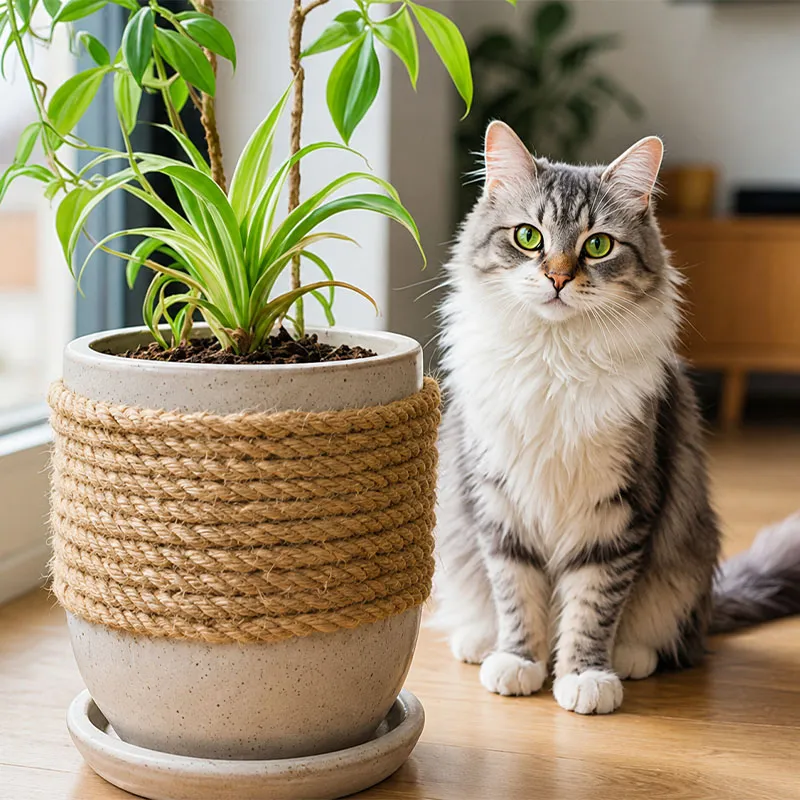
An 8mm cord offers a useful balance between thickness and flexibility. It is wide enough to cover a post with fewer rows than a thin 6mm cord, yet it can still bend around common wooden posts and cardboard tubes.
The visible braid produces a rough texture that gives claws a firm grip. Many cats love the texture because it offers resistance when they pull downward. This can make the material ideal for scratching, especially on a tall vertical structure.
The main benefits include:
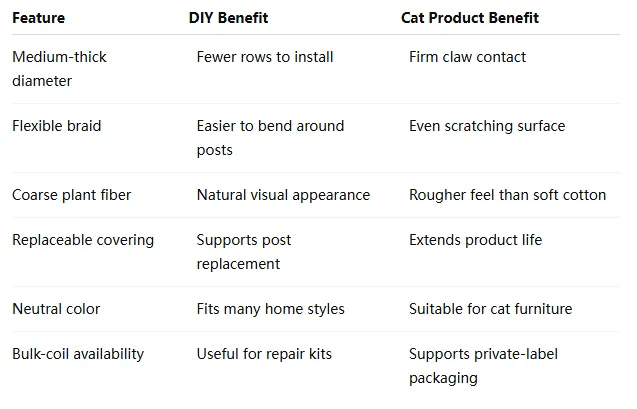
A very thin cord requires more turns. A very thick rope may be harder to keep close together around a narrow column. For many home projects and repair kits, 8mm is a practical middle option.
However, diameter alone does not define quality. Buyers should inspect:
- Diameter tolerance
- Twist or braid consistency
- Fiber shedding
- Odor
- Moisture
- Surface oil
- Color treatment
- Coil length
- Breaking or separation during wrapping
A good natural sisal rope should feel dry and firm. It should not have a strong chemical smell or oily surface. For pet applications, non-treated material is often easier to position than rope with heavy coatings or unknown dyes.
Is Sisal Rope Better Than Hemp, Cardboard, or a Cat Scratching Mat?
Sisal comes from the Agave sisalana plant and has a long history as a cordage fiber. Its coarse structure makes it useful for rope and other hard-wearing applications.
Compared with hemp rope, sisal often feels firmer and rougher. Hemp may feel softer and can work well in decorative DIY cat furniture, but wear performance depends on the rope construction. Cotton is even softer, although it may flatten more quickly under repeated clawing.
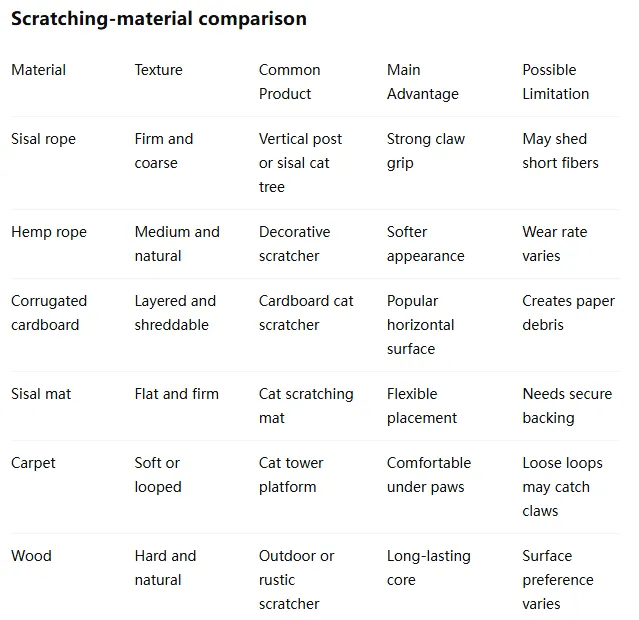
A sisal cat scratcher is often a good fit for vertical scratching. By contrast, cardboard cat scratchers work well for cats that like to scratch across the floor. Some animals use both.
A flat sisal cat scratching mat can also protect a wall, floor, or furniture panel. Related products include:
Cat scratch mat
- Sisal cat scratch mat
- Cat scratching wall mat
- Cat scratching mat for furniture
- Cat scratcher couch protector
- Cat furniture protector
- Cat scratcher side table
Which Tools Are Needed for a DIY Cat Scratcher?
A simple DIY project does not require complex equipment, but using the right tools makes the result safer and cleaner.
Prepare:
- Measured sisal rope
- A stable wood or cardboard core
- A wide base
- Measuring tape
- Pencil
- Strong scissors or a rope cutter
- Work gloves
- Staple gun
- Suitable short staples
- Pet-appropriate adhesive
- Hammer or driver
- Optional catnip
- Optional perch or platform
Some builders use hot glue or wood glue to support the wrapping. Adhesive should stay beneath the cord, not on the exposed scratching surface. Allow it to cure completely before the product is used.
How Do You Build a DIY Cat Scratching Post?
A stable structure comes first. Even the best scratching rope cannot fix a post that tips or rocks. Cornell and the ASPCA both recommend a sturdy structure that lets the animal stretch fully.
A 2×4 can work for a short design, while a wider 4×4-style column can support a taller post. The final choice depends on the post height, base width, cat size, and whether the design includes a platform.
Step 1: Build or inspect the base
Use a base broad enough to resist side force. Round the edges and remove splinters. If the post will support a perch, test the connection before adding cord.
Step 2: Mark the scratching area
Decide whether the material will cover the whole post or only the part the cat can reach. Mark the starting and finishing points.
Step 3: Secure the first end
Begin at the bottom of the post. Place the end on the back or underside. Use a recessed fastener or suitable adhesive.
Step 4: Start wrapping
Turn the rope around the column while pulling steadily. Do not let the first few rows move.
Step 5: Push every row together
Keep the turns close together. Gaps expose the core and may cause uneven wear.
Step 6: Maintain tension
Keep the rope taut. Stop every few rows and press the material downward. Loose wrapping can rotate under the claws.
Step 7: Finish the upper end
Cut the cord cleanly. Hide the final end behind the post or under a platform. Secure it without exposing metal or hardened adhesive.
Step 8: Inspect the complete structure
Pull at several areas. Check for movement, long fibers, gaps, sharp edges, and accessible staples.
When you wrap the rope, work slowly. Small corrections are easier than removing half the column later.
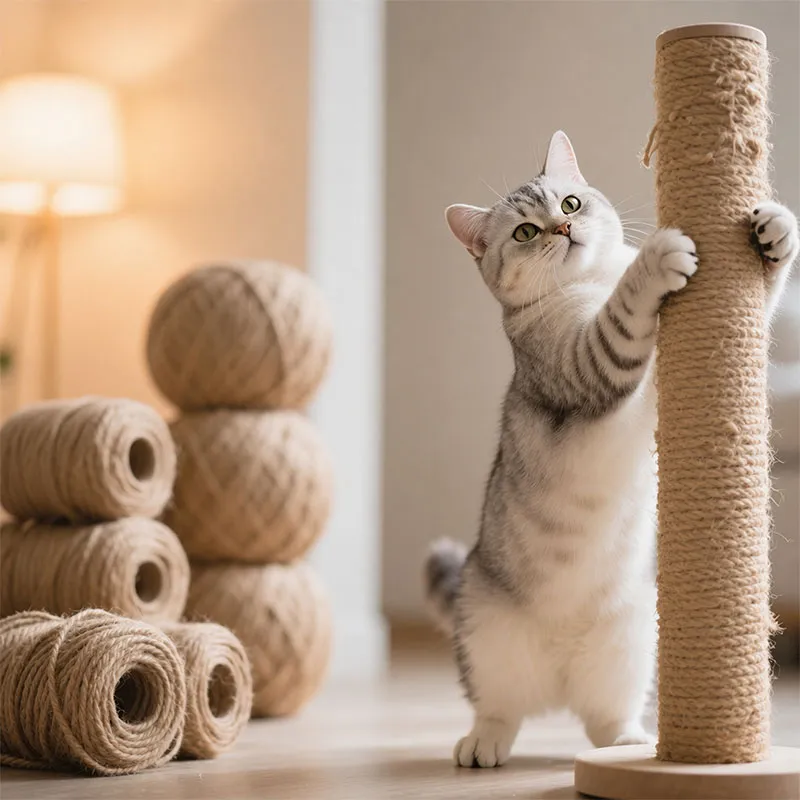
The rope can be wrapped around round posts, square wood, or a strong cardboard tube. On square posts, press the cord firmly into every corner instead of letting it bridge across the edges.
How Do You Repair a Cat Scratch Post With New Rope?
A worn post does not always need to be replaced. In fact, cats may prefer familiar and well-used scratching products because they carry the animal’s scent and show clear claw marks. Both Cornell and the ASPCA advise against throwing away a favorite post simply because it looks worn.
You can repair cat scratching furniture when the base and core remain solid. First, remove the old rope. Pull out every staple and scrape away hard pieces of adhesive. Check the wood or cardboard for cracks, moisture, mold, and crushing.
Repair or replace?
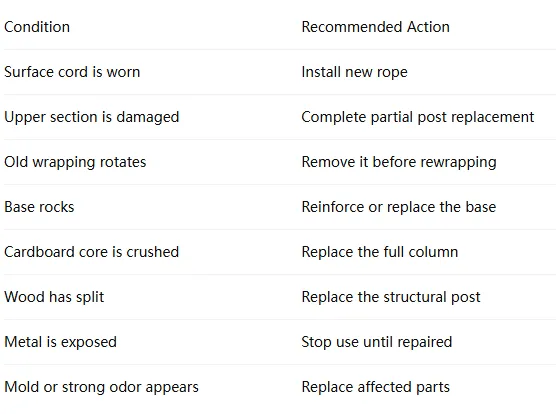
Do not install new rope over unstable old rope. The damaged layer may continue to move underneath.
A small degree of fray is normal as a cat uses the post. Long loops, detached coils, or hanging fibers need attention. Trim loose sections and check the anchoring points.
A scratching post repair kit can include:
- Pre-measured cord
- Installation guide
- Gloves
- Fasteners
- Cutting guide
- QR-linked video
- Replacement end caps
For retailers, this creates a repeat-purchase opportunity. Customers can repair a familiar product instead of replacing the complete frame.
Can the Rope Be Used on a DIY Cat Tree, Cat Tower, or Cat Condo?
Yes. The rope can be used on a DIY cat tree, modular cat tree, wall climber, cat tower, or cat condo. It can cover a main support column, a smaller post under a perch, or the side of a climbing ramp.
A sisal cat tree combines scratching with climbing, resting, and play. Related search terms include:
- Cat tree
- Cat tower
- Cat condo
- Multi-level cat tree
- Modular cat tree
- Cat scratcher tree
- Tree cat scratching post
- DIY cat tree scratching post
- DIY cat furniture
- DIY cat tree for large cats
Place the wrapped section where the animal can reach it easily. A short area hidden behind a platform may receive little attention. A tall, open section lets the cat stretch and pull downward.
The rope can also cover part of a furniture corner guard or wall-mounted scratching board. However, keep it away from moving hinges, narrow gaps, and areas where loops could trap a paw.
For a tree replacement, check the original post diameter and connector type. Some cat towers use threaded rods. Others use screws from below. A replacement column must fit both the furniture and the packaging instructions.

How Can You Encourage a Cat to Use the New Scratching Area?
Place the post near an area the animal already uses. If the cat scratches the sofa arm, position the new post directly beside it. Move it gradually after regular use begins.
Cornell recommends matching the scratcher’s material and direction to the cat’s preference. Treats, praise, and catnip may also encourage investigation.
Try these steps:
- Place the post beside the current scratching target.
- Keep the structure stable.
- Move a wand toy around the post.
- Add a small amount of catnip when suitable.
- Reward calm interest.
- Offer both vertical and horizontal surfaces.
- Avoid punishment.
- Leave familiar worn sections when they remain safe.
Do not hold the animal and drag its paws across the material. The ASPCA warns that forcing contact can frighten a cat and teach it to avoid both the product and the person.
One kitty may choose a tall column. Another may prefer cardboard scratchers. Cats love the texture that best matches their own habits.
Watch whether the cat likes to scratch upward, downward, or across the floor. This helps you make a cat scratching setup that feels natural.
You can also add compatible cat toys or interactive toys near the post. The goal is to combine scratching, climbing, and playtime without making the product crowded or unstable.
What Do Customer Reviews Reveal About Cat Scratchers?
Customer reviews often repeat the same problems:
- The base is too light.
- The post is too short.
- The wrapping comes loose.
- The surface has a strong odor.
- The cord sheds too quickly.
- Fasteners become exposed.
- Assembly instructions are unclear.
- Replacement parts are unavailable.
These comments provide useful product-development data. A brand should not treat every complaint as an isolated event.
Example case study: worn upper section
An online retailer sells a medium-height scratching column. After several months, customer reviews show that the upper third wears faster than the base.
The retailer and sourcing partner study the use pattern and make five changes:
- Increase the wrapped height.
- Improve tension during production.
- Add a replaceable upper sleeve.
- Include post-repair instructions.
- Offer a refill coil as an accessory.
The updated product creates more value. It also gives the retailer an after-sales item instead of losing the customer when the surface wears out.
For DIY users, the lesson is similar. Look at the area the cat actually uses. Repair that zone first. Decorative cord near the base may stay untouched while the upper scratching surface wears quickly.

What Should B2B Buyers Check When Sourcing Sisal Rope and Cat Furniture?
A B2B buyer should inspect more than diameter and color. Problems can appear in raw material, winding, moisture, odor, length, packaging, and finished assembly.
At PetNivo Tech, we recommend reviewing the following details before confirming an order.
Rope specification checklist
- Fiber type
- Declared diameter
- Diameter tolerance
- Twist or braid structure
- Coil length
- Weight per coil
- Natural or dyed color
- Fiber shedding
- Moisture level
- Odor
- Oil or coating
- Treatment information
- Storage requirements
- UV-resistant claim, if tested and required
Do not assume every general craft rope is suitable as rope for cat scratcher production. Gardening, packaging, and industrial cord may use different treatments or quality standards.
A UV resistant claim also needs evidence. It may matter for outdoor or semi-outdoor pet products, but it should not be added simply because the keyword appears in a search list.
Finished-product checklist
- Post height
- Column diameter
- Base width and weight
- Wrapping tension
- Fastener position
- Exposed adhesive
- Edge finishing
- Stability
- Load-bearing points
- Packaging protection
- Assembly guide
- Replacement-part plan
The scratcher rope should be easy to work with while remaining firm after installation. It should not arrive wet, heavily stained, or mixed with sharp debris.
Private-label product formats
PetNivo can help B2B customers evaluate products such as:
- Bulk rope coils
- DIY cat scratching post kits
- Retail scratching post repair kits
- Finished sisal scratching posts
- Modular cat tree replacement columns
- Cat scratching mats
- Cardboard cat scratchers
- Cat furniture protectors
- Cat towers and cat condos
- Mixed cat enrichment collections
Possible customization may include:
- Rope diameter
- Coil length
- Product color
- Label design
- Printed cartons
- Instruction cards
- Product bundles
- Replacement fastener packs
- Private-label packaging
- Multilingual manuals
The actual customization method, MOQ, and delivery schedule depend on the selected product and branding depth.
Why Work With PetNivo Tech for Cat Scratching Products?
PetNivo Tech is a China-based B2B pet supplies sourcing and OEM/private-label partner. We support importers, distributors, retailers, e-commerce sellers, and pet brands that need market-ready products without managing every factory and component separately.
Our role can include:
- Product selection
- Manufacturing-partner coordination
- Material review
- Sample development
- Packaging customization
- Logo application
- Production follow-up
- Quality inspection
- Export packaging
- Shipment coordination
For a scratching-product range, we can help buyers combine replacement rope, finished posts, cat trees, scratching mats, cardboard products, and other pet products into a coordinated category.
Frequently Asked Questions
Is 8mm sisal rope thick enough for a scratching post?
Yes. It works well for many medium-size scratching posts, cat trees, and repair projects. It creates a firm surface and needs fewer wrapping rows than thinner cord.
Is sisal rope safe for cats?
Untreated sisal is commonly used on scratching products, but buyers should still inspect the actual material. Avoid cord with unknown chemicals, strong odors, oily surfaces, sharp debris, or unstable dyes.
How tightly should I wrap the rope?
Keep the rows firm, close together, and evenly tensioned. The material should not rotate or slide when you pull it by hand.
Can I use a glue gun instead of a staple gun?
Adhesive may support the wrapping, but it should be suitable for the material and hidden beneath the cord. Mechanical anchoring may still be useful at the first and final ends. Never leave hardened glue or metal exposed.
Can I put new rope over the old covering?
It is better to remove unstable old material first. New wrapping placed over loose cord may shift and wear unevenly.
Is sisal better than a cardboard cat scratcher?
It depends on the cat. Sisal is often suitable for vertical posts, while cardboard works well for horizontal scratching. Many cat owners offer both.










 August 05, 2026