Three variables set the cost of an automatic feeder order: reservoir capacity, power and connectivity, and equipment-authorization paperwork. PetNivo’s published range runs from a 2.5 L gravity feeder at US$3.19–5.99 to a 5 L food plus 5 L water dispenser at US$60–85; wireless models can add FCC and EU RED paperwork.
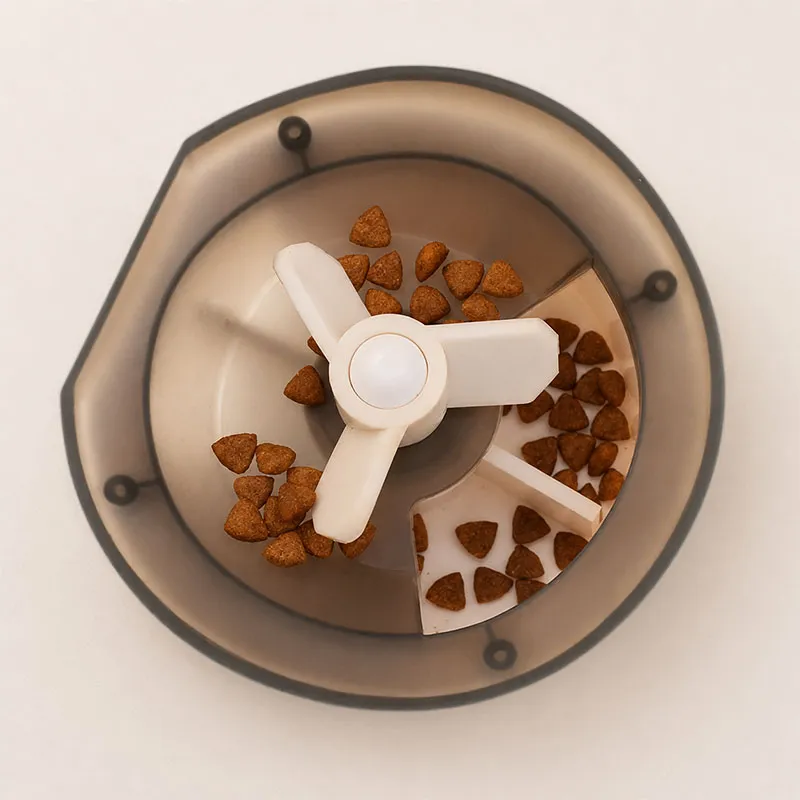
What the current feeder range covers
| Model |
Capacity |
Reference Price |
| A2-in-1 Gravity Pet Feeder and Water Dispenser |
2.5 L food + 1.2 L water |
US$3.19–5.99 |
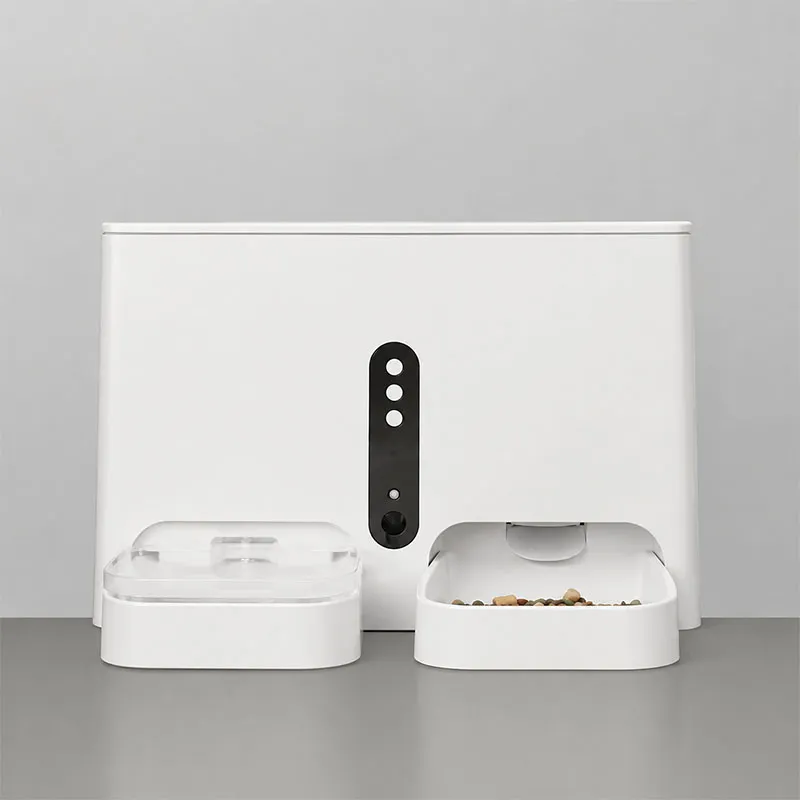
| Automatic Pet Feeder and Water Dispenser |
5 L food + 5 L water |
US$60–85 |
| Smart Pet Food Feeder with Storage |
Not disclosed — request |
Quote required |
| Automatic Smart Pet Feeder |
Not disclosed — request |
Quote required |
The feeding and hydration category as a whole carries a typical MOQ of roughly 50–200 pcs, depending on model and customization. Per-model MOQs for the four feeders above have not been published, so treat that range as a planning band only.
Two gaps matter for a buyer. None of the four listings publishes a power source (mains adapter, batteries or USB), and none publishes a wireless or camera specification. Those are the fields that decide the compliance path further down.
Ten litres is two reservoirs, not one
The 5 L + 5 L unit holds 5 L of food , separately, 5 L of water. A buyer who lines it up against a competitor’s “10 L feeder” is comparing a split system against a single tank, and the food volume is the number that drives refill frequency.
The gravity model makes the split obvious. Its 2.5 L food reservoir is half the size of the larger unit’s, and its 1.2 L water reservoir is 24% of the 5 L tank.
Litres also don’t convert to kilograms of kibble. PetNivo has published no kibble-weight figure, and kibble density varies by product. Load your own target kibble into a sample and record how much the food reservoir takes before you set retail claims such as “days of food.”
Powered or gravity: what the price gap buys
Using the reference ranges above, the arithmetic looks like this:
| Model |
Total Reservoir Volume |
Reference Price |
Price per Litre of Reservoir |
| Gravity Feeder, 2.5 L + 1.2 L |
3.7 L |
US$3.19–5.99 |
About US$0.86–1.62 |
| Automatic Feeder and Dispenser, 5 L + 5 L |
10 L |
US$60–85 |
US$6.00–8.50 |
The per-litre figures are simple division on reference price ranges, and they mix food and water volume, so read them as a scale indicator only. At the extremes, the automatic unit costs about 10 times (US$60 vs US$5.99) to about 27 times (US$85 vs US$3.19) the gravity feeder’s price for 2.7 times the reservoir volume.
The library does not itemize that gap. It could be motor, controls, enclosure, or a combination, which is why the quote should name the power source and any wireless module line by line.
Compared with common gravity-only feeders at this price band, an automatic unit moves a brand into a different cost tier and into a different documentation tier. The paperwork is the part first-time importers tend to price last.
Wireless models and the paperwork they trigger
Three frameworks are relevant for connected pet devices, and which ones apply depends on the features you order.
- FCC Equipment Authorization (United States). The FCC states that radio-frequency devices must follow the applicable equipment authorization requirements before U.S. marketing or importation. A Wi-Fi or Bluetooth app link means the feeder contains a radio.
- EU Radio Equipment Directive 2014/53/EU (RED). It is potentially relevant to wireless feeders and other products that meet the definition of radio equipment sold into the EU.
- EU RoHS Directive 2011/65/EU. It regulates restricted hazardous substances in electrical and electronic equipment, so it can be relevant even to a feeder with a timer and no radio.
PetNivo has not published certificate numbers, issuing bodies or test-report numbers for any of the four feeders. No feeder here should be described as FCC-, CE- or RoHS-certified until the product-specific certificate, declaration or lab report is in your file.
One edge case catches buyers: a report for a sibling model does not cover yours. Confirm that the document names the exact model number you will import, and that it matches the connectivity option you ordered. Whether a non-wireless electronic feeder needs a different FCC pathway is a question for the test lab, since the resource library does not address it.
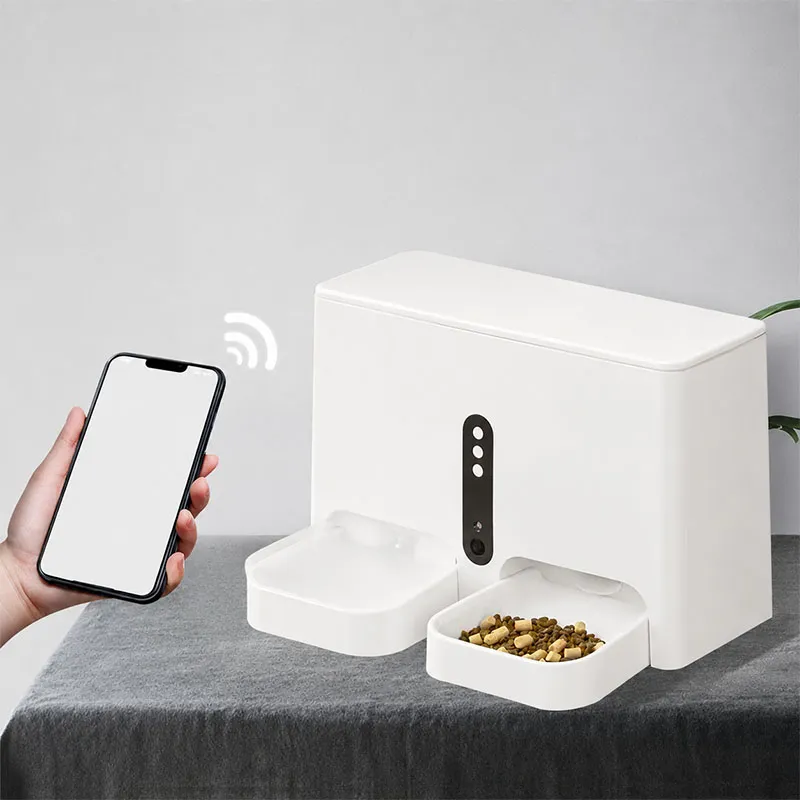
Cameras add a second layer. The pet-feeder listings reviewed here publish no camera specification, so any “feeder with camera” spec sheet needs to be requested from scratch: sensor, connectivity method and the module that carries it.
Food-contact materials in the reservoirs
Food and water reservoirs touch what the pet consumes. The FDA’s food contact substance framework explains that such materials may require authorization under food-contact notifications or food-additive regulations. For the EU, Regulation (EC) No 1935/2004 is the reference for materials intended to contact food.
The reservoir material for each feeder is not disclosed. Ask for a material declaration and the target-market food-contact documentation with the sample, not at the pre-shipment stage.
Five steps to vet a powered-feeder quote
- Get the power source (adapter, batteries or USB) and the connectivity option (none, Wi-Fi, Bluetooth) written on the quote against the exact model number.
- Request the reservoir material declaration and the food-contact documentation for your destination market.
- For any wireless model, request the FCC authorization record and/or RED documentation naming that model; for any electrical model, request the RoHS declaration or lab report.
- Fill-test the sample: load your target kibble, note where the reservoir tops out, and photograph the fill line.
- Get carton dimensions and packing count in writing. Neither is published for these feeders, and freight cannot be costed without them.
Customization, samples and lead times
Available OEM and private-label options include logo branding, silk-screen printing, laser engraving, woven labels, color boxes, kraft packaging, hang tags, instruction manuals, colors and materials. PetNivo states sample production at 7–14 days and mass production at 30–45 days after sample approval, depending on customization complexity. Trade terms supported are FOB, CIF and DDP.
Those lead times do not say whether authorization testing time is included. For a wireless model, schedule lab work separately and ask PetNivo which parts of it it can coordinate.
When an automatic feeder is the wrong buy
For a brand competing under about US$6 per feeder, the gravity model at 3.7 L combined capacity and US$3.19–5.99 fits the price band, and it avoids the wireless paperwork question altogether if no radio is involved. That part is unconfirmed, since the power spec is undisclosed.
The powered units carry three real costs: a price 10 to 27 times higher at the listed extremes, no published certificate numbers, and open fields for power, connectivity and MOQ. A brand without the budget or timeline to wait for test documents should not start with a wireless model.
If you still want one, send PetNivo your target market, connectivity choice and quantity, and ask for the documents in the steps above before you pay for samples. A question the public data cannot answer is how long test-lab work adds to your schedule.
FAQ
What is the largest capacity in PetNivo’s published feeder range?
The Automatic Pet Feeder and Water Dispenser holds 5 L of food and 5 L of water in separate reservoirs. Capacities for the two smart feeders are not disclosed.
How much do these feeders cost?
Reference prices are US$60–85 for the 5 L + 5 L unit and US$3.19–5.99 for the 2.5 L + 1.2 L gravity model. The two smart feeders need a quotation, and all figures are screening prices, not quotes.
Are PetNivo’s feeders FCC or CE certified?
No certificate numbers or issuing bodies are published. Request the product-specific documentation before making any certification claim.
Which regulations matter for a wireless feeder?
FCC equipment authorization applies before U.S. marketing or importation of RF devices. The EU RED (2014/53/EU) and RoHS (2011/65/EU) are potentially relevant in the EU, depending on the features.
Can I put my own logo and packaging on a feeder?
Yes, in principle: logo branding, color boxes, hang tags and manuals are listed OEM options. Feeder-specific limits on customization are not published, so confirm them at the quote stage.










 September 29, 2026