Before ordering outdoor plastic dog houses, confirm five things directly with your supplier: wall thickness in millimeters, the UV stabilizer used, the drainage and elevation design, what hardware assembly requires, and both packed and assembled dimensions. None of these show up reliably in a standard product listing, and each one changes your landed cost or return rate.
Why Bulky Plastic Housing Needs a Different Checklist
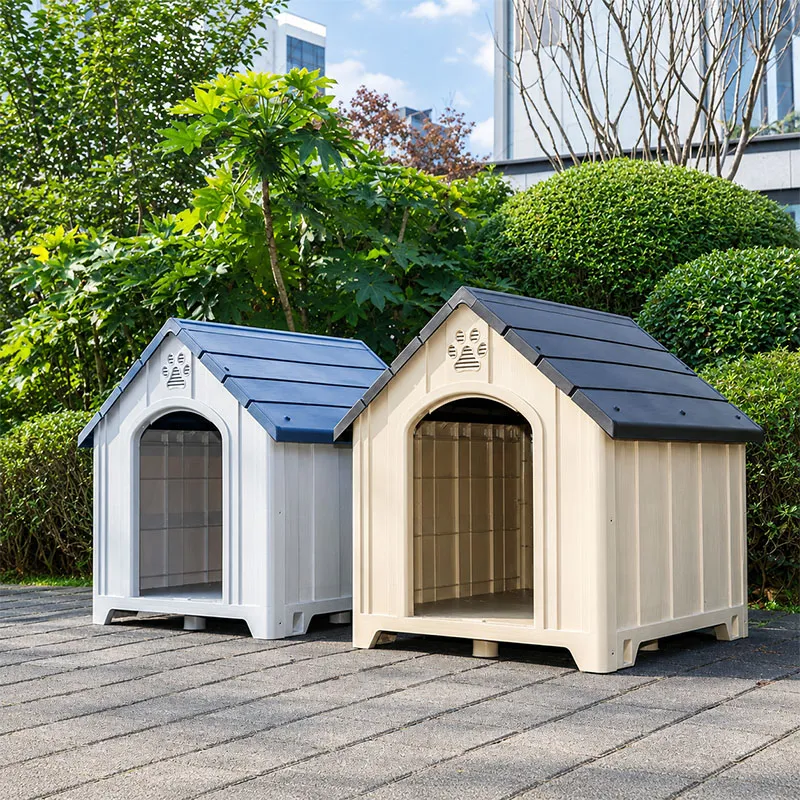
Outdoor housing behaves differently from feeding bowls or crates once it’s on a pallet. A single dog house can run 0.3–0.6 CBM depending on size and whether it ships flat-packed, and ocean or air freight on bulky, low-density cargo is usually billed on volume rather than weight. A product that looks cheap per unit on a quote sheet can still produce a high landed cost once the carrier calculates dimensional weight. That gap is where most first-time buyers of this category get surprised.
Demand for the category has grown alongside broader outdoor pet spending. The American Pet Products Association reports 95 million pet-owning U.S. households and $158 billion in industry spending for 2025, and outdoor housing sits inside that broader category of backyard and patio pet gear. That demand doesn’t change what you need to verify before placing an order — it just means more buyers are entering this SKU without having sourced bulky plastic goods before.
The Seven-Point Verification Checklist
Work through these with your supplier before you commit to a sample order, not after.
- The UV stabilizer type and expected service life. “UV resistant” without a stabilizer type — HALS, UV absorbers, or a specific masterbatch ratio — is a marketing phrase, not a spec. Ask what percentage of UV stabilizer is used in the resin and whether the supplier can share any weathering test data, even informal in-house results.
- Wall thickness, measured in millimeters, not described as “heavy-duty.” Ask for the minimum thickness on the roof panel and side panels separately. The roof usually thins out first under UV and rain exposure. Request this as a written spec rather than a measurement off a demo unit, since sample builds are sometimes finished to a different spec than the production run.
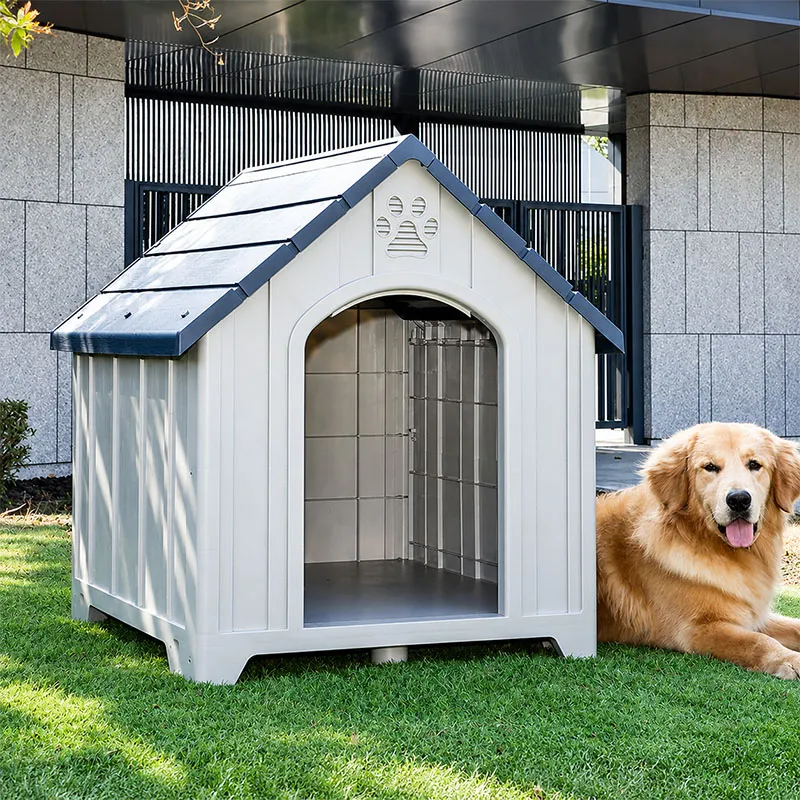
- Drainage and ground clearance design, confirmed in writing. A waterproof shell keeps rain out from above. It doesn’t address water pooling underneath if the base isn’t elevated or doesn’t include drainage holes. Ask specifically how the base handles standing water and whether the floor sits above or level with the frame.
- Assembly hardware and an honest build-time estimate. Confirm whether the unit is snap-fit, screw-assembled, or a mix, and whether hardware ships in the carton or has to be sourced separately. If your retail customers will assemble these themselves, ask for an estimated assembly time and whether instructions are translated into English.
- Packed (flat-pack) dimensions and assembled dimensions, both. These numbers are rarely the same, and only the packed dimensions matter for freight. Ask for carton dimensions and gross weight per carton, not just the assembled footprint shown on a product page.
- Dimensional weight, calculated before you accept a per-unit quote. This is the step distributors skip most often. Multiply the packed carton’s length × width × height (in cm) by the carton count, divide by the freight forwarder’s dim-weight divisor (commonly 5,000 for ocean, 6,000 for air), and compare that figure against the actual cargo weight. Freight is billed on whichever number is higher, and bulky plastic housing routinely fails this test even when the unit price looked competitive on the quote sheet.
- What the certification language actually covers. If a listing mentions food-grade material, ISO, or similar terms, confirm it applies to that exact SKU and ask for the certificate number and issuing body. PetNivo does not currently publish certificate numbers for its outdoor housing line — any “ISO” or “FDA” reference on a product page should be treated as unverified until documentation is provided, and the same standard should apply to any supplier you’re evaluating.
Verification Checklist At a Glance
| Checklist Item |
What to Request |
Red Flag |
| Wall Thickness |
Written specification showing roof and side-panel thicknesses in millimeters |
Only a verbal “heavy-duty” description |
| UV Treatment |
Stabilizer type and treatment percentage |
“UV resistant” with no material details |
| Drainage |
Written confirmation of base clearance and drainage-hole placement |
Waterproofing claims with no drainage details |
| Assembly |
Hardware list and confirmation that all parts ship with the carton |
No hardware count or assembly-time estimate |
| Packed vs. Assembled Size |
Carton dimensions and gross weight |
Only assembled dimensions provided |
| Dimensional Weight |
Your own calculation based on carton dimensions |
Quotation based on unit weight alone |
| Certification Claims |
Certificate number and issuing body |
Certification named without supporting documentation |
How This Compares to Wood-Frame and Insulated Housing
Compared with wood-frame or foam-insulated dog houses commonly sourced by distributors, molded plastic housing ships lighter per unit and resists rot, but it loses on insulation value in cold climates and can warp if wall thickness runs thin and the unit sits in direct sun for extended periods. Buyers stocking both product types for different regional markets are better off treating plastic housing as a warm- or mild-climate SKU rather than a like-for-like replacement for insulated designs.
What’s Confirmed by PetNivo, and What Still Needs a Supplier Conversation
PetNivo‘s general OEM terms apply across its outdoor and living product lines: sample production typically runs 7–14 days, and mass production takes 30–45 days after sample approval, with the exact timeline depending on customization complexity. Those figures are consistent across the catalog and aren’t specific to any one SKU.
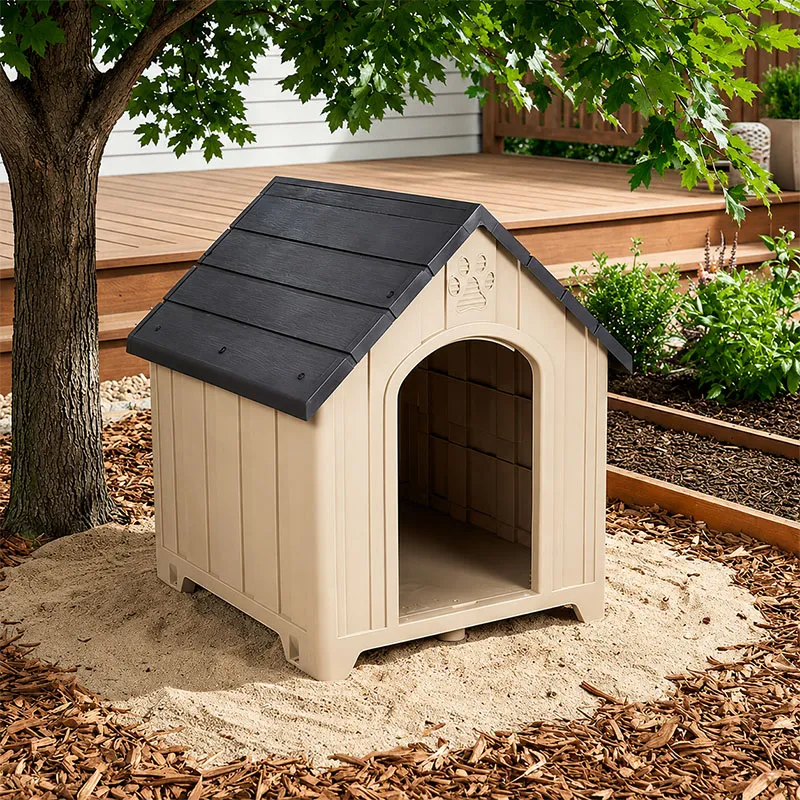
What isn’t yet published for the outdoor plastic dog house specifically: per-unit and carton dimensions, wall thickness, UV treatment details, MOQ, and pricing. None of that should be assumed from other items in the same product line — a metal-frame crate’s dimensions or MOQ, for example, don’t transfer to a molded plastic shell built on different tooling. Treat the seven-point checklist above as the request list for your supplier quote conversation, and confirm pricing is quoted against your specific configuration rather than pulled from a general catalog range.
FAQ
Is a plastic dog house better than wood for outdoor use?
It depends on climate and maintenance tolerance. Plastic resists rot and hoses down easily, but wood or insulated designs typically hold heat better in cold-weather regions. Distributors serving mixed climates often stock both.
How long does UV exposure typically affect plastic pet housing?
This varies by resin formulation and UV stabilizer percentage, which is why the checklist above asks for that detail directly from the supplier rather than relying on “UV resistant” as a standalone claim.
What MOQ should I expect for a custom outdoor dog house order?
PetNivo hasn’t published a fixed MOQ for this specific product, so it needs supplier confirmation as part of your quote request.
Can I get pricing without placing a sample order?
Yes. Pricing for this SKU isn’t published and needs to be requested directly against your specified configuration.
Buyers who’ve been caught by a dimensional weight surprise before usually ask for a written quote sheet listing all seven checklist items side by side, rather than accepting a one-line spec on a product page. That record is worth keeping past the first order — it’s what you compare a reorder sample against when checking whether a supplier’s tooling or materials have drifted.










 September 24, 2026