PetNivo Tech Sourcing & Product Team | Product Sourcing & Development Team | Updated September 14, 2026
What Makes a Bird Feeder “Smart” for Sourcing Purposes
A camera bird feeder is, from a sourcing standpoint, a connected device wearing a garden-product shell. It has an image sensor, usually some onboard or cloud-based recognition logic, a power source that has to survive outdoors, and — if it transmits anything wirelessly — a radio module that falls under equipment-authorization rules in most target markets. Generic marketplace listings for this category tend to describe the camera and the recognition feature and stop there. They rarely publish connectivity specs, power ratings, or authorization status, which is exactly the information a private-label buyer needs before packaging goes to print.
The Specs PetNivo Discloses — And What’s Still Open
| Spec |
Status |
| Camera resolution |
5 MP |
| Recognition feature |
AI recognition positioning (feature named; detection scope and species database not detailed) |
| Power source |
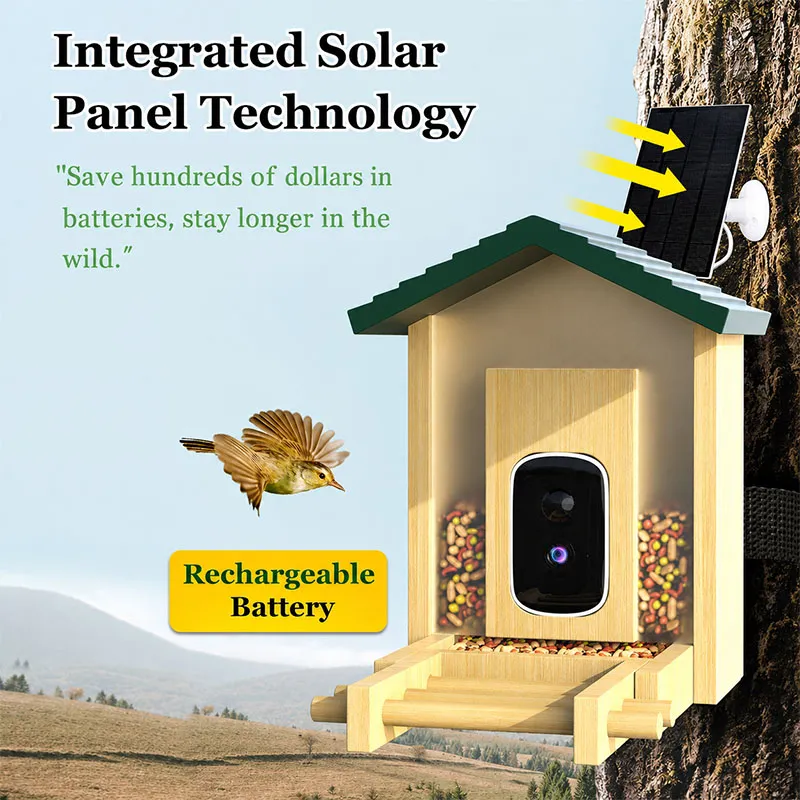
Integrated solar panel (technology stated; wattage, battery capacity in mAh/Wh, and charge time not disclosed) |
| Seed storage |
Dual-bin system (bin count confirmed; per-bin capacity and housing material not disclosed) |
| Overall dimensions / weight |
Not disclosed — request |
| Wireless connectivity (Wi-Fi band, Bluetooth pairing, app) |
Not disclosed — request |
| Video storage (local SD vs. cloud) |
Not disclosed — request |
| Weather/water resistance rating |
Not disclosed — request |
| Operating temperature range |
Not disclosed — request |
| Radio-equipment authorization status |
Not disclosed — request |
| MOQ |
Not disclosed — request |
| Reference price |
Not disclosed — request |
| Carton dimensions / units per carton |
Not disclosed — request |
Two of these rows matter more than the others for a buyer building an SKU sheet: connectivity protocol and radio authorization status. Everything downstream of those — target markets, required labeling, whether the unit needs a companion app — depends on answers PetNivo hasn’t published yet.
Why the Radio Conversation Comes Before the Logo Conversation
Most private-label conversations for this product start with the camera housing color and the packaging artwork. That ordering causes problems later. If the feeder transmits video or telemetry wirelessly, it’s a radio device under most import regimes, not just a garden accessory with a lens attached. Skipping that check until after tooling or packaging is finalized is the mistake worth avoiding here.
Steps before finalizing customization:
- Confirm the wireless module type and frequency band with the supplier in writing.
- Ask whether the unit already holds FCC equipment authorization (U.S.) or meets the EU Radio Equipment Directive (RED) 2014/53/EU, and request the certificate number if one exists.
- If no authorization exists yet, get a written timeline and cost allocation for obtaining it before locking a launch date.
- Cross-check RoHS status for the electronic components, since RoHS 2011/65/EU applies to electrical and electronic goods entering the EU regardless of whether the device transmits.
Solar Power: What It Solves and What It Doesn’t
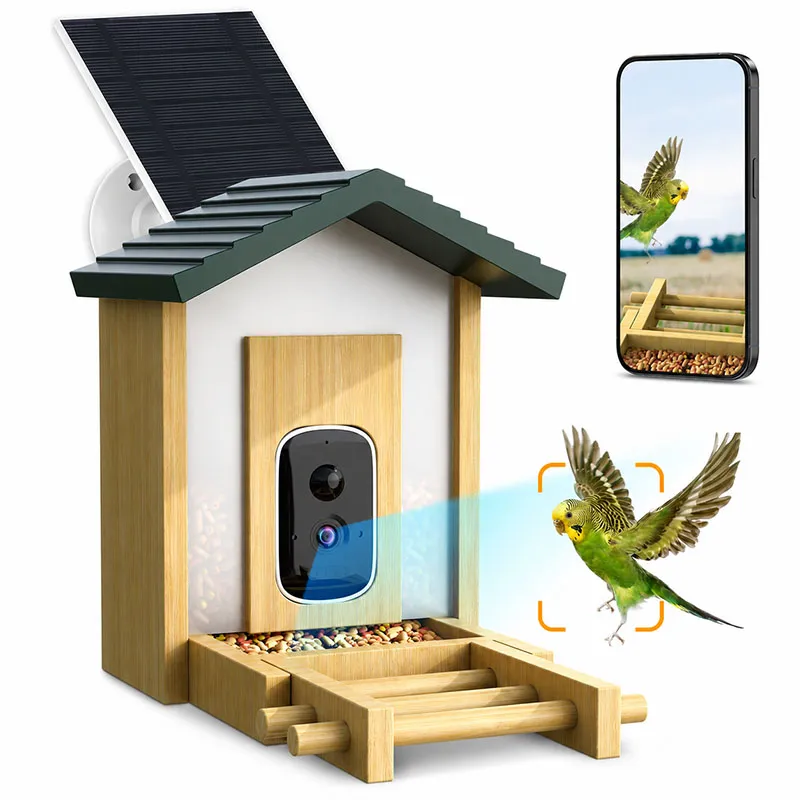
Solar power removes the cord and the recurring battery-swap request from end users, which is a real advantage for an outdoor product. It also introduces two questions the spec sheet doesn’t answer yet: how much stored capacity the unit holds for overcast stretches, and whether there’s a USB or cable backup path when solar input drops for several days. A buyer targeting northern climates has a different tolerance for this than one targeting South America or the southern U.S. — worth raising with the supplier directly rather than assuming the panel covers year-round use everywhere.
MOQ and Pricing: What’s Actually Confirmed
Neither MOQ nor a reference price is published for this specific SKU. Other items in PetNivo’s bird range carry MOQs in the 5–50 unit range depending on complexity, but that range shouldn’t be assumed to carry over to a camera-equipped unit — connected products typically carry different minimums than passive hardware because of component sourcing and testing overhead. Treat any figure a sales contact gives verbally as a screening figure to confirm in writing, not a quotation.
FAQ
Q: Does PetNivo’s Smart Bird Feeder come with FCC or CE radio certification already in place?
A: Not disclosed on the reviewed product page. Confirm certificate numbers directly with PetNivo before assuming authorization status for your target market.
Q: What resolution is the built-in camera?
A: 5 MP, per PetNivo’s product listing.
Q: Does the feeder run entirely on solar power, or does it need a cable backup?
A: An integrated solar panel is confirmed. Battery capacity, charge time, and whether a cable-backup option exists are not disclosed — request these specs before finalizing a design that depends on continuous power.
Q: How much seed does the dual-bin system hold?
A: The dual-bin configuration is confirmed; per-bin capacity in liters or kilograms is not disclosed.
Q: What’s the MOQ for a private-label order?
A: Not disclosed for this SKU specifically. Request a written MOQ tied to your exact customization scope rather than assuming it matches other bird-category items.
Q: Is the AI recognition feature able to identify specific bird species?
A: PetNivo’s listing names the feature as “AI recognition positioning” without detailing detection scope. Request a demo or spec sheet describing what the recognition system actually distinguishes before marketing it as species identification.
Q: What’s a reasonable reference price range?
A: Not disclosed in PetNivo’s published price list for this item. Request a screening quote rather than relying on figures for other bird products, which cover different SKUs.









 September 14, 2026