PetNivo Tech Sourcing & Product Team | Product Sourcing & Development Team | Updated August 2026
At current MOQs, a cardboard scratcher order runs roughly $495–$595 for 50 units; a sisal cat tree order runs $450–$516 for 20 units. The two aren’t interchangeable — cardboard is a flat consumable, sisal is a structural furniture piece — and that difference drives freight, reorder frequency and shelf placement.
The Two Formats Aren’t Competing for the Same Shelf Spot
Cardboard and sisal scratchers get compared as if a buyer picks one over the other. In practice they solve different problems. A corrugated cardboard board is a low-cost, flat-packable consumable. A sisal-wrapped cat tree is furniture with a scratching post built into a larger structure. Retail buyers who stock both usually aren’t choosing between them — they’re deciding how much shelf and freight budget to give each category.
That distinction matters more for e-commerce catalogs than it does for a single retail location, because freight cube and reorder cadence hit differently at scale. This comparison uses only the dimensions, materials and pricing disclosed in PetNivo’s product catalog. Where a figure isn’t published, it’s marked as such rather than estimated.
Spec Comparison: Cardboard vs Sisal Side-by-Side
| Attribute |
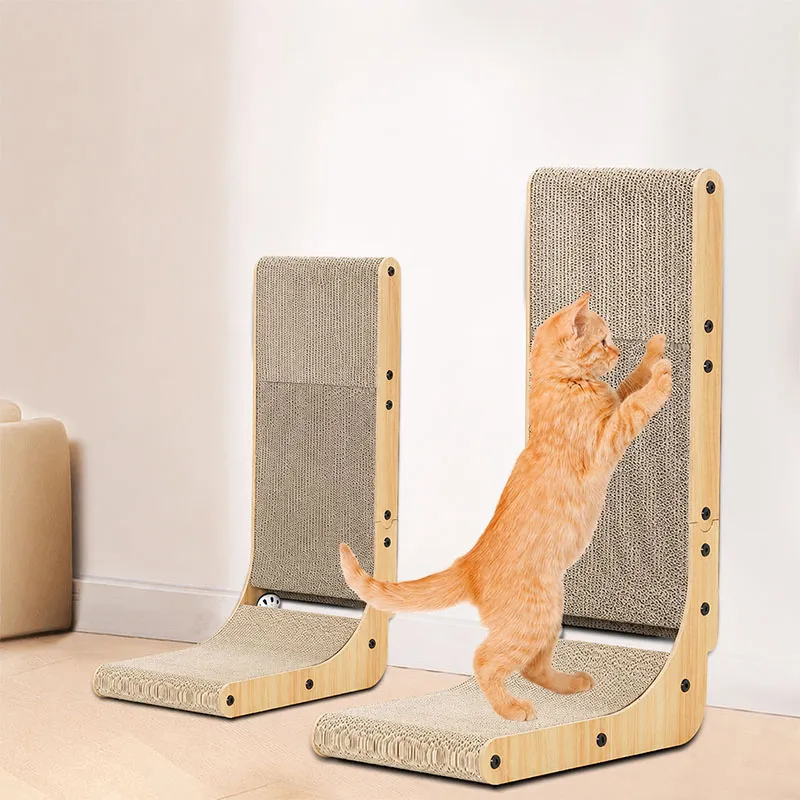
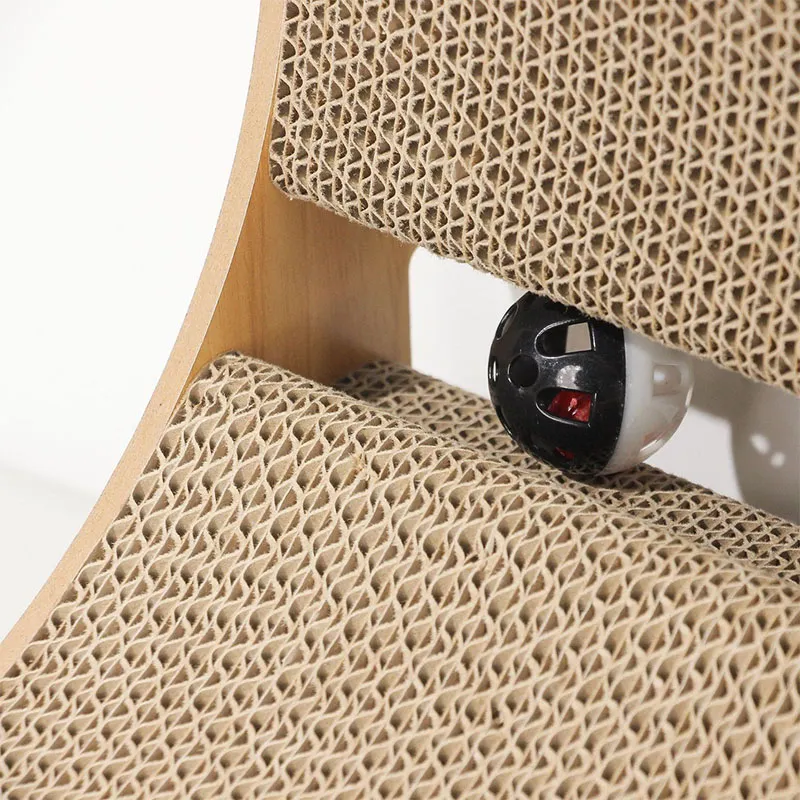
Natural L-Shaped Cat Scratching Board (Cardboard) |
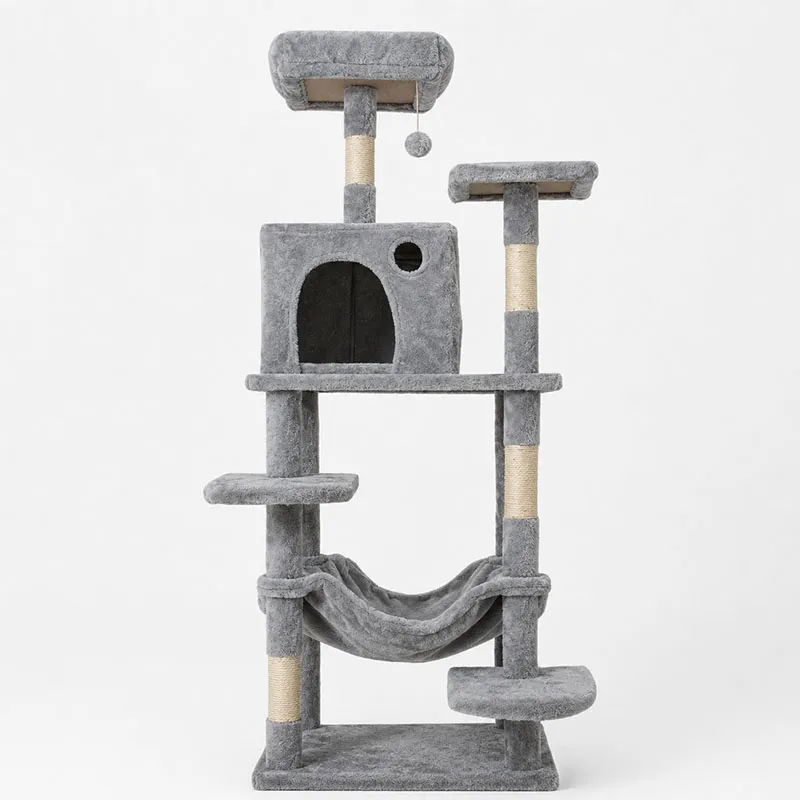
Multilevel Plush Cat Tree (Sisal), 140 cm |
| Format |
Flat, freestanding L-shaped board |
Vertical multi-level tree with condo/platforms |
| Dimensions |
370 × 180 × 180 mm |
140 cm height; base approx. 55 × 45 cm |
| Scratching surface |
Corrugated cardboard |
Natural sisal-wrapped columns |
| Frame/structure |
Solid wood frame |
Particle-board core |
| Additional covering |
None (cardboard is the surface) |
Plush fabric on platforms |
| MOQ |
50 pcs |
20 units |
| Website reference price |
US$9.9–11.9 |
US$22.5–25.8 |
| Order value at MOQ |
~$495–$595 |
~$450–$516 |
| Carton/packing volume |
Not disclosed — request |
Not disclosed — request |
| Certification |
None disclosed |
None disclosed |
A second SKU, listed only as “L-Shaped Cat Scratching Board” without a published dimension set, appears to be a variant of the cardboard line. Buyers evaluating that specific listing should request its individual spec sheet rather than assuming it matches the 370 × 180 × 180 mm model above.
Why the Order Value Gap Is Smaller Than the Unit Price Suggests
Sisal furniture looks roughly twice the price of cardboard per unit. But because the cardboard MOQ is 50 pieces against 20 for the cat tree, total capital tied up at minimum order is close: a first-time buyer testing cardboard commits about the same dollar amount as one testing sisal, just spread across more than double the unit count. For a catalog that wants shelf-price flexibility (multiple SKUs, promotional bundling), the cardboard side offers more units to work with per dollar of inventory risk.
Compared to the marketplace listing walls that currently rank for this keyword, none of them run this MOQ-to-order-value math — they list unit price and stop there, which hides the actual capital commitment a first order requires.
Reorder Pressure: What the Materials Tell You Without Guessing at a Timeline
PetNivo’s catalog doesn’t publish a tested replacement-cycle figure for either product, so no specific timeframe claim is made here. What the material specs do support: corrugated cardboard is the wear surface itself — once it’s shredded, the board is functionally done and gets replaced as a unit. Sisal wrap sits on a wood or particle-board post that isn’t consumed the same way; the post stays structurally intact even as the sisal surface shows wear.
That structural difference is why cardboard scratchers are commonly positioned as a repeat-purchase, bundle-friendly SKU, while sisal cat trees behave more like a one-time furniture purchase per household. Neither behavior is confirmed by PetNivo-published usage data — it follows from the disclosed materials, not from a customer study.
One Reorder Mistake Buyers Make With the Cardboard MOQ
Buyers sometimes size a first cardboard order at exactly 50 units — the MOQ floor — and then discover the reorder lead time doesn’t line up with how fast a genuinely repeat-purchase SKU moves. If cardboard scratchers are stocked as a recurring consumable line rather than a one-off test SKU, ordering at the bare MOQ means a second production run gets triggered almost immediately, which erodes any per-unit cost advantage gained from consolidating a larger single order. Testing at MOQ makes sense for a brand-new SKU with unknown sell-through; it’s a weaker choice once sell-through data already shows repeat demand.
Where Sisal Wins Even With the Higher Per-Unit MOQ Cost
Sisal cat trees carry a structural advantage cardboard can’t match on this spec sheet: the particle-board core and multi-level platform design support weight-bearing use — climbing, perching, sleeping — that a flat cardboard board isn’t built for. For catalogs targeting a higher price point or a “furniture” category placement rather than a “consumable accessory” placement, the 20-unit MOQ is the lower barrier of the two, not the higher one, since it reaches a premium SKU tier at a smaller total unit commitment.
The trade-off: cardboard’s 50-unit MOQ at sub-$12 pricing fits impulse-purchase or bundle-add placement better than a $22–26 furniture piece does.
Which Fits Your Catalog
- Testing a new scratching-accessory line with limited shelf commitment: cardboard’s lower per-unit price and higher MOQ unit count spread risk across more SKUs for close to the same capital outlay.
- Building out a furniture or premium-cat category: the sisal tree’s lower unit MOQ (20 vs 50) reaches that price tier without requiring the larger unit commitment cardboard needs.
- Running both as complementary SKUs: cardboard as a repeat-purchase consumable, sisal as a one-time furniture anchor — this is how the two formats are most often stocked together rather than as substitutes.
Neither product’s carton dimensions or packing count per master carton are published, so landed freight cost per unit — as opposed to product-only order value — isn’t calculable from what’s currently disclosed. That figure should be confirmed directly before finalizing a container plan, particularly for the taller cat tree, where dimensional weight is likely to matter more than it does for the flat cardboard board.
For broader context on category demand, APPA’s most recent U.S. industry reporting puts total pet industry expenditure at $158 billion for 2025 across 95 million pet-owning households — scratching and enrichment products sit inside that spend, though PetNivo does not publish category-specific sell-through data of its own.
FAQ
Q: Is the sisal cat tree more durable than the cardboard scratcher?
A: The published specs support that conclusion for the frame — particle board holds up to repeated climbing weight where cardboard doesn’t — but PetNivo hasn’t disclosed a tested lifespan figure for either product, so “more durable” refers to structural design, not a measured comparison.
Q: Can the cardboard scratcher MOQ be split across the two listed variants?
A: PetNivo’s catalog doesn’t specify whether the Natural L-Shaped board and the unnamed “L-Shaped Cat Scratching Board” variant can be combined to meet a single 50-piece MOQ. That needs to be confirmed directly with the sourcing team before planning an order around it.
Q: Are either of these products certified for a specific market’s furniture or toy-safety standard?
A: No certificate numbers or issuing bodies are disclosed for either product in PetNivo’s catalog. Buyers who need a specific certification for their market should request documentation before listing that claim.
Q: What’s not covered by the reference prices in this comparison?
A: The listed prices are website reference figures only. They don’t include freight, customization (logo, packaging, color), or duties, and final pricing depends on order specifics.









 August 28, 2026