PetNivo Tech Sourcing & Product Team | Published: November 4, 2026 | Last updated: November 4, 2026
A stainless steel cat litter box costs more per unit than a plastic pan, but its non-porous surface resists the scratches that trap odor in plastic, and it typically outlasts plastic under daily scooping. For retailers, the decision turns on three things: a written steel grade, freight weight and dent protection, and shelf-price positioning.
This guide is written for pet supply retailers deciding whether a stainless line belongs on the shelf or in the online store, and which questions to put to a supplier before the first purchase order.
What “Stainless Steel Litter Box” Actually Covers
The term gets applied to two different constructions. Separate them before you compare quotes.
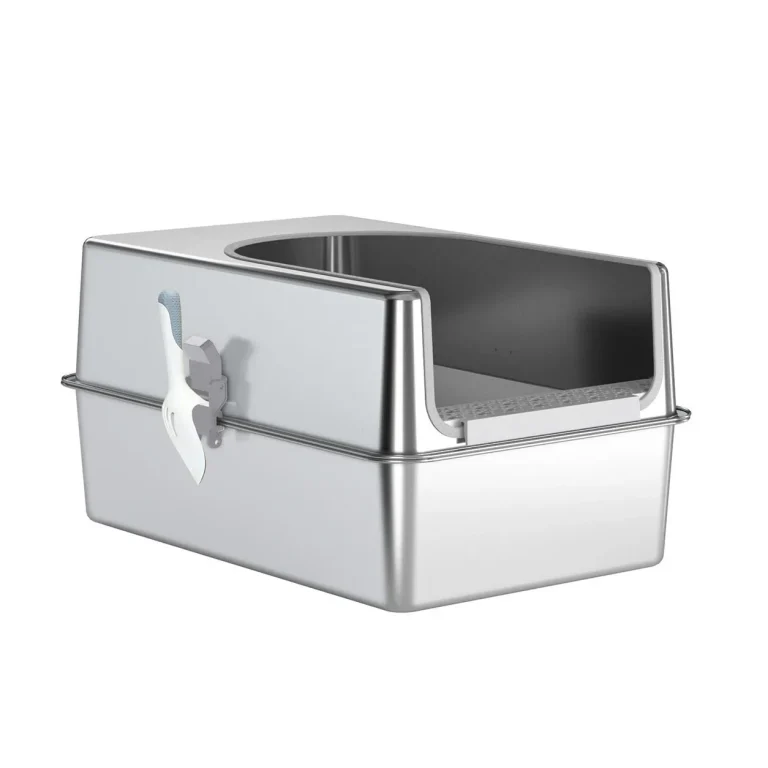
- All-steel pans. Tray and walls are formed from stainless sheet. Open-top, high-sided boxes usually fall into this group.
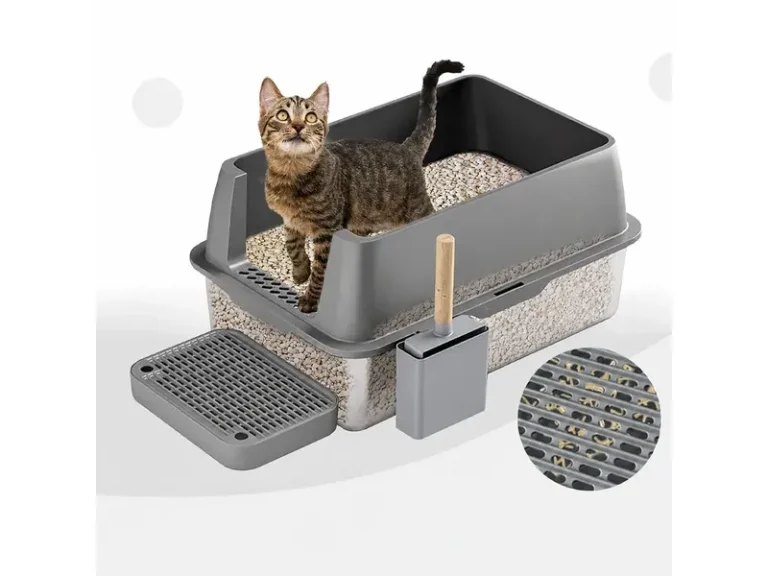
- Hybrid enclosed boxes. A stainless steel pan sits under a hood, frame or lid made from plastic such as ABS. Steel handles the surface that contacts waste; plastic forms the enclosure.
This distinction shapes your product copy. Steel’s scratch and odor advantages belong to the steel surfaces only. On a hybrid unit the hood still behaves like plastic, so a listing that promises “odor-free stainless construction” overstates what the customer receives and invites returns.

Stainless Steel vs Plastic: 9 Factors Retailers Should Price In
Compared with the injection-molded plastic pan that dominates mass retail, stainless steel trades a higher purchase price for a harder, non-porous surface. The table breaks that trade-off into the factors you will actually cost, ship and handle complaints about.
| Factor |
Stainless steel |
Molded plastic (PP / ABS) |
| Surface after months of scooping |
Resists gouging from scoops; polished finishes can show light surface marks |
Scoop scratches accumulate and can hold urine residue |
| Odor behavior over time |
Non-porous, so residue stays on the surface where washing removes it |
Scratched areas tend to hold odor as the pan ages |
| Cleaning |
Tolerates hot water and firm scrubbing; avoid leaving bleach on the surface |
Easy when new, harder once the surface is scratched |
| Typical failure |
Dents; rust spots if the grade is low or salts sit on the steel |
Cracks, warping, staining |
| Useful life |
Longer, which is the main selling argument |
Shorter; replaced when scratches, stains or odor build up |
| Unit cost |
Higher. PetNivo’s XL high-sided model lists at US$21.3–25 |
Lower; not part of PetNivo’s published price list |
| Weight and freight |
Heavier per unit; packed weight must be confirmed before costing freight |
Lighter; molded pans often nest tightly in cartons |
| Design range |
Fewer shapes; color usually comes from plastic hoods or coatings |
Wide range of shapes, colors and molded features |
| Transit damage |
A dented unit is usually unsellable |
Corners can crack, particularly in cold-weather transit |
The practical reading: stainless steel sells well to a customer who has already replaced plastic boxes because of smell or staining. It is a harder sell to a first-time kitten owner shopping on price. Plan your range and your shelf talker around the first customer.
201 or 304? The Grade Question Most Listings Skip
Consumer listings often name “201” or “304” stainless and leave it there. For a retailer, the grade decides how the box looks after six months of urine, cleaning sprays and damp litter, which makes it a returns question as much as a materials question.
ASTM A240, the standard specification for stainless steel sheet and plate, sets the composition ranges:
| Grade (UNS no.) |
Chromium |
Nickel |
Manganese |
What it means in a litter box |
| 304 (S30400) |
18.0–20.0% |
8.0–10.5% |
2.0% max |
Better resistance to pitting and surface rust in wet, salty conditions |
| 201 (S20100) |
16.0–18.0% |
3.5–5.5% |
5.5–7.5% |
Lower material cost; more prone to rust spots where moisture and salts sit |
Why this matters for a litter box specifically: urine contains dissolved salts, including chlorides, and chlorides are the main driver of pitting corrosion on stainless steel. Clumping litter holds that moisture against the pan floor for hours at a time. Chlorine bleach adds more chloride on top. A 304 pan tolerates this considerably better than a 201 pan, although neither grade is immune if bleach is left to dry on the surface.
Common mistake: relying on the magnet test
Buyers often hold a magnet to a sample and assume “non-magnetic means 304.” It doesn’t. Both 201 and 304 are austenitic grades and are largely non-magnetic in the annealed state, so a magnet cannot tell them apart. Forming a deep pan can also make 304 slightly magnetic at bends and corners, which leads some buyers to reject good material. The one thing a magnet does flag is a ferritic grade such as 430, which pulls strongly.
What to ask for instead
- The steel grade written into the proforma invoice and purchase order.
- A material test report (mill certificate) for the coil batch used in your production run.
- On larger orders, a handheld XRF spot check during pre-shipment inspection, or a third-party lab analysis of a randomly pulled unit.
PetNivo’s product pages for the three models below do not publish a steel grade. Request it in writing with your quotation, and keep “304” off your packaging and listings until you hold documentation that supports it.

PetNivo’s Stainless Models: Specs, MOQ and Price
PetNivo’s cat hygiene range includes three stainless steel models with published specifications. Where a figure is not published, the table says so rather than estimating it.
| Specification |
Extra Large Stainless Steel Cat Litter Box with High Sides |
65L Enclosed Stainless Steel Cat Litter Box |
Closed-Type Cat Litter Box, Model K4 |
| Construction |
Stainless steel, open top, high sides |
Stainless-steel pan, enclosed |
Stainless steel + ABS |
| Dimensions |
Approx. 61 × 40 × 44 cm |
60 × 40 × 40.5 cm |
60 × 40 × 38 cm |
| Capacity |
Not published |
65 L |
Not published |
| Access |
Open top |
Front and top access |
Enclosed (entry details not published) |
| Cat size guidance |
Not published |
Stated as suitable for cats up to approx. 10 kg |
Not published |
| Additional features |
— |
— |
Bamboo-charcoal component; infrared detector design |
| Colors |
Not published |
Not published |
Black / grey |
| MOQ |
20 pcs |
Not published; confirm with quotation |
Not published; confirm with quotation |
| Website reference price |
US$21.3–25 |
Price on request |
Price on request |
| Steel grade |
Not published |
Not published |
Not published |
Extra Large Stainless Steel Cat Litter Box with High Sides
This is the simplest model to trial. It has a published MOQ of 20 pcs and a published price range, and the open-top design leaves nothing mechanical to fail. The 44 cm sides target cats that kick litter or spray high. The same height can make entry hard for senior cats and young kittens, so check on your sample whether there is a lowered entry point and photograph it for your listing. Shoppers with older cats ask about this.
65L Enclosed Stainless Steel Cat Litter Box
The 65 L capacity and the website’s guidance of cats up to roughly 10 kg position this model for multi-cat homes and larger breeds. Two access points, front and top, give owners options for entry and scooping; confirm on the sample which opening is designed as the cat entrance before you write the listing. MOQ and price are not published, so request both with your quotation.
Closed-Type Cat Litter Box, Model K4
The K4 is a hybrid: stainless steel plus ABS, with a bamboo-charcoal component and an infrared detector design, in black or grey. PetNivo’s listing does not explain what the infrared detector triggers or how it is powered. Get answers to both before you describe the K4 as “smart,” “automatic” or “self-cleaning” anywhere in your store.
If the detector runs on powered electronics, compliance enters the picture. For EU sales, the RoHS Directive 2011/65/EU on hazardous substances in electrical and electronic equipment may apply. If the unit turns out to include any wireless function, U.S. FCC equipment authorization and the EU Radio Equipment Directive 2014/53/EU become relevant as well. Ask for the documents that match the confirmed features rather than assuming either way.

Where Stainless Steel Falls Short
Each of these limitations can cost a retailer money, which is why they belong in your buying decision and not only in a footnote.
- Shelf price. At a wholesale reference of US$21.3–25 for the XL model before freight, duties and margin, stainless lands well above the impulse-buy range for litter boxes. Without point-of-sale copy explaining the longer life, it sits on the shelf.
- Freight cost per unit. Steel weighs more than molded plastic of the same footprint, and PetNivo does not publish packed weights for these models. As a rough reference, the XL model’s outer dimensions give an envelope of about 0.107 m³ per unit (0.61 × 0.40 × 0.44 m). Whether units nest inside each other in the carton is unconfirmed, and that single detail can change freight cost per unit substantially. Ask before you calculate landed cost.
- Dents. Steel dents where plastic would flex. A dented box usually cannot be sold at full price, and online customers return it.
- Rust complaints from low grades. If a 201 pan reaches a customer who cleans with bleach, rust spots can follow. You absorb the complaint either way, which is why the grade documentation above matters.
- Edges and seams. Formed steel can leave sharp rims or rough weld lines if finishing is skipped. Check this on every sample.
- Noise. Scooping against a steel floor is louder than against plastic. It is minor, but it comes up in reviews.
How to Vet a Stainless Litter Box Sample Before Your First Order
PetNivo states sample production generally takes 7–14 days. Use that window to run these checks, and record the result of each one so the same criteria carry into pre-shipment inspection.
- Confirm the grade in writing. Get the steel grade on the quotation and request the mill certificate for the production batch. If the supplier cannot provide either, treat the material as unverified.
- Run a gloved hand along every rim and seam. Rims should be rolled or folded rather than raw-cut. Weld lines should be ground smooth with no burrs that could catch a paw or a customer’s hand.
- Measure the interior. Record usable floor length, width and side height and compare them against the published outer dimensions. Your listing should quote the dimensions customers care about: floor area and entry height.
- Do a simple damp-corner check. Leave a damp, lightly salted paper towel in one inside corner for 48–72 hours, then wipe and inspect. This is an informal screen, not a certified test, but rust bloom on a sample is a strong warning sign. For formal results, ask whether the supplier can provide salt-spray test data.
- Drop the packed carton. Drop the sample in its retail packaging onto a corner from about waist height and check for dents. If it dents, ask for corner protectors, thicker foam or a revised carton before mass production.
- Test the K4’s electronics, if you are ranging it. Power it on, confirm the power source, observe what the infrared detector does, and request the manual plus any compliance documents that match the confirmed features.
- Check every claim on the packaging. Grade, capacity, cat weight and “odor control” wording must match the documents you hold. Remove anything you cannot support.
- Write your inspection criteria. Agree on acceptable limits for dents, surface scratches, finish consistency between batches and packaging condition. PetNivo’s pre-shipment QC covers appearance, materials, workmanship, packaging and order accuracy, and your written criteria give that inspection something specific to measure against.
FAQ
Q: Is a stainless steel litter box better than plastic?
A: For durability and long-term odor control, generally yes, because steel resists the scoop scratches that hold odor in plastic. Plastic still wins on unit price, weight and design variety. For retailers, stainless suits customers replacing smelly or stained plastic boxes rather than first-time, price-led buyers.
Q: Does a stainless steel cat litter box rust?
A: It can. Grade 304 resists rust better than grade 201 in wet, salty conditions such as urine-soaked litter, but neither grade tolerates bleach left to dry on the surface. Ask suppliers for the grade in writing and a mill certificate before ordering.
Q: How can I tell if a litter box is 304 or 201 stainless steel?
A: Not with a magnet, since both grades are largely non-magnetic. Ask for a material test report for the production batch, or use XRF testing or a third-party lab analysis on a sample unit.
Q: What is the MOQ for PetNivo’s stainless steel litter boxes?
A: The Extra Large Stainless Steel Cat Litter Box with High Sides has a published MOQ of 20 pcs. MOQs for the 65L Enclosed model and the K4 are not published and are confirmed with each quotation.
Q: How much does a wholesale stainless steel litter box cost?
A: PetNivo’s Extra Large model with high sides has a website reference price of US$21.3–25. The 65L Enclosed model and the K4 are priced on request. Final prices depend on quantity, customization, packaging and shipping terms.
Q: Is the K4 an automatic litter box?
A: PetNivo’s listing describes an infrared detector design but does not state what it controls or how it is powered. Confirm the function with the supplier before describing it as automatic or self-cleaning.
Q: Can I put my own brand on a stainless steel litter box?
A: Yes. PetNivo offers logo customization, including laser engraving and silk-screen printing, plus custom color boxes, kraft packaging, hang tags and instruction manuals.










 November 04, 2026