PetNivo Tech Sourcing & Product Team | Published: November 3, 2026
Fountain, dispenser, “automatic”: what the labels actually mean
Marketplace listings use these words loosely, and that looseness causes buying mistakes.
A pumped water fountain contains a small electric pump that lifts water from a reservoir and returns it through a spout, plate or bubbler. Most designs route the water through a replaceable filter cartridge. It needs a power source (adapter, USB cable or battery) to do anything beyond acting as a bowl.
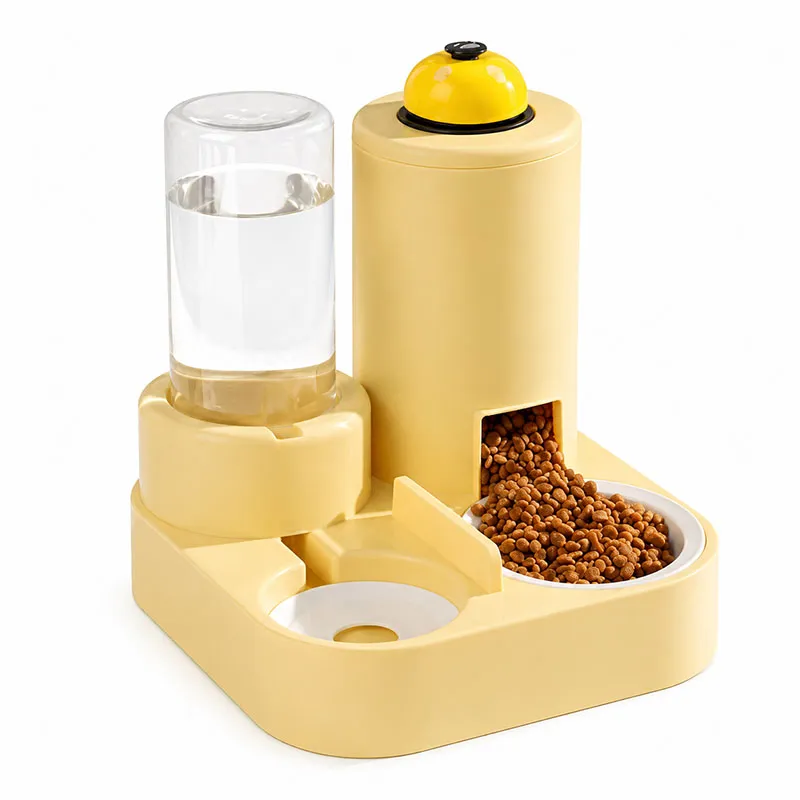
A gravity water dispenser is an inverted or upright reservoir that feeds a drinking tray. As the dog drinks and the water level drops, air enters the reservoir and more water flows down. No motor, no cable, no filter required.
The common misconception: “automatic” does not mean “pumped”
Many gravity dispensers are sold as “automatic waterers” because they refill the bowl without human help. Some fountain listings also include “gravity” in the title for search reach. A buyer who orders “automatic water dispensers” expecting circulating water can end up with a passive reservoir, or the reverse. Before quoting a product to your own customers, confirm three things in writing: whether a pump is present, what powers it, and whether a filter is part of the design.
Side-by-side: how the two compare on sourcing factors
The table below describes the typical configuration of each product category. Individual products vary, so treat it as a checklist of what to verify rather than a specification.
| Factor |
Pumped fountain (typical) |
Gravity dispenser (typical) |
| Power required |
Yes: adapter, USB or battery |
No |
| Moving / electrical parts |
Pump, impeller, cable or battery, sometimes sensors |
None in most designs |
| Consumables |
Replacement filter cartridges |
None required |
| Most likely failure points |
Pump noise or stoppage, cable damage, impeller clogging with hair |
Reservoir leaks, cracked tray, poor seal at the cap |
| Cleaning routine for end user |
Disassemble pump and filter housing on a schedule |
Rinse reservoir and tray |
| Works during a power outage |
Only if battery-powered |
Yes |
| Compliance scope (market-dependent) |
Food-contact materials plus electrical safety, and radio rules if wireless |
Food-contact materials |
| After-sales support load |
Spare pumps, filters, troubleshooting questions |
Mostly replacement trays or caps |
| Shelf demonstration |
Needs power to show the feature |
Self-explanatory on display |
| PetNivo catalog status |
No pumped fountain confirmed in published data |
Listed (see specs section below) |
Compared with pumped fountains, gravity dispensers trade the “fresh flowing water” selling point for a far shorter list of things that can break.
Parts count is where after-sales cost starts
Every additional component is another way for a unit to come back. That matters more to a retailer than to a single pet owner, because you absorb the returns across hundreds of units.
Typical pumped fountain build
- Reservoir body
- Pump housing and submersible pump
- Impeller (the part most often jammed by hair and debris)
- Filter cartridge and filter holder
- Spout, plate or top cover
- Power adapter, USB cable or rechargeable battery
- Optional: water-level sensor, indicator light, wireless module
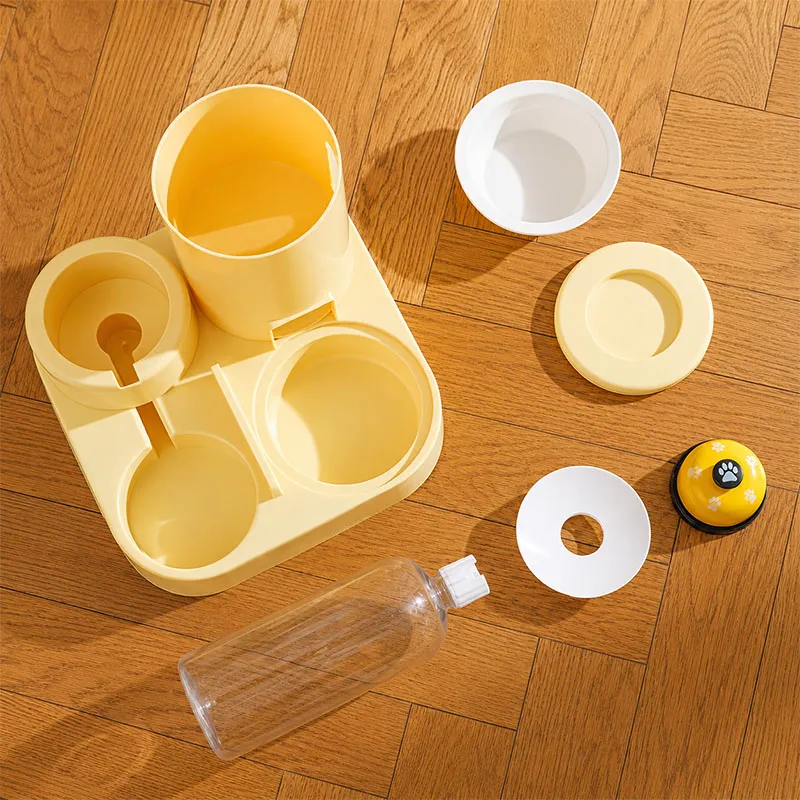
Typical gravity dispenser build
- Reservoir bottle or tank
- Base and drinking tray
- Cap or valve seal
Seven-plus parts versus three is not automatically a problem. A fountain’s higher ticket can cover more support cost. The issue is whether your supplier backs those parts once the product is on your shelf.
Warranty and return exposure: where the risk actually sits
We are not aware of any published, category-wide return-rate figures that would let us put a reliable number on fountains versus dispensers, so we will not quote one. What can be described is the shape of the risk.
Fountain returns tend to be functional. A pump that becomes noisy after a few weeks, stops because the impeller is wrapped in hair, or runs dry when the reservoir empties is a failure the customer experiences as “broken,” even when the root cause is maintenance. Each of these generates a support contact, and many end in a replacement or refund.
Gravity dispenser returns tend to be physical. Leaks at the cap seal, cracked reservoirs from drops in transit, or trays that slide on smooth floors. These are easier to diagnose from a customer photo and more often caught at pre-shipment inspection.
The practical difference: a gravity dispenser’s defects are mostly visible before it ships, while a fountain’s can surface only after weeks of use. That is why pre-shipment QC covers less of the fountain’s real risk.
If you do list a pumped fountain, negotiate these before the first order:
- Spare pumps supplied at a set ratio per shipment, or available at a fixed price
- Filter cartridge supply committed for the life of the listing, with packaging that matches your private label
- A written statement of the pump’s expected service life and the conditions it assumes (water hardness, cleaning interval)
- Agreement on who covers a unit that fails within your own customer-facing warranty period
What PetNivo currently lists: specs and reference prices
To state it plainly: PetNivo’s published catalog includes two feeder-and-water combination products, and neither is documented as a pumped, circulating water fountain. We do not currently publish a standalone pumped dog water fountain.
| Specification |
2-in-1 Gravity Pet Feeder and Water Dispenser |
Automatic Pet Feeder and Water Dispenser |
| Capacity |
2.5 L food + 1.2 L water |
5 L food + 5 L water |
| Water delivery |
Gravity (per product name) |
Not specified in published data |
| Power source |
Not required for gravity function |
Not specified in published data |
| Website reference price |
US$3.19–5.99 |
US$60–85 |
| Published MOQ |
Not specified for this model |
Not specified for this model |
| Certification documents |
None published |
None published |
A few points a retailer should take from this table:
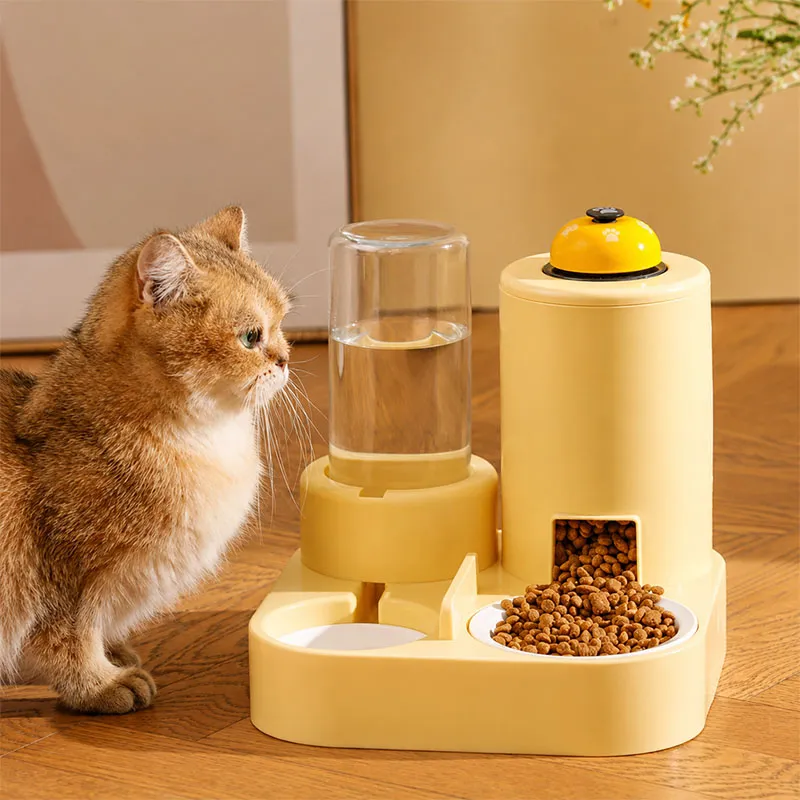
- The 2-in-1 gravity unit is the low-risk entry SKU. No electrical components are indicated, and at a reference price under US$6, it suits bundle offers and add-on sales. Its 1.2 L water side is small, so position it for cats and small dogs rather than large breeds.
- The 5 L + 5 L unit needs confirmation before you describe its water side. The product is listed as “automatic,” and the price gap versus the gravity model is consistent with a powered feeder. However, our published data does not state whether the water side circulates with a pump or refills by gravity. Request that confirmation, plus power-source details, before writing your own listing copy.
- MOQ for these two models must be quoted. PetNivo’s feeding and hydration line generally runs around 50–200 pcs depending on model and customization, but that range is a line-level reference, not a confirmed figure for either SKU.
- No food-contact certificates or test reports are published for either model. Ask for material documentation (see the compliance section) rather than assuming it exists.
When a pumped fountain still earns shelf space
A gravity dispenser is not the right answer for every store.
Fountains carry a higher ticket and, through filter cartridges, a repeat purchase that a gravity dispenser cannot generate. For a store with a loyal local customer base, a filter refill is a reason to come back every few weeks. The flowing-water feature is also the main reason owners give for buying one: a dog that ignores a still bowl is the customer this product is built for.
The U.S. market is large enough to support both tiers. The American Pet Products Association (APPA) reports 95 million U.S. pet-owning households, so a store can reasonably stock an entry gravity model and a premium fountain without the two competing for the same buyer.
Where fountains fit less well: outdoor kennels without power access, stores with no capacity to handle troubleshooting calls, and online-only sellers who cannot absorb the cost of shipping returns for a product that “stopped working.”
Compliance: the checklist grows with every electrical part
None of the products discussed here should be marketed as “FDA certified,” “CE certified” or similar unless the supplier provides a product-specific certificate, declaration or lab report. What changes between categories is which frameworks apply.
- Both types (food-contact materials): In the U.S., the FDA’s food contact substance framework governs materials that touch food or water; some substances require authorization through food-contact notifications or food-additive regulations. In the EU, Regulation (EC) No 1935/2004 sets the general requirements for materials intended to contact food. Ask for material declarations covering the tray, reservoir and any filter media.
- Pumped fountains (electrical): For the EU, the RoHS Directive 2011/65/EU restricts hazardous substances in electrical and electronic equipment, which brings a powered fountain into scope. Electrical safety expectations also differ by market and by retailer, so ask your own channel what it requires.
- Only if wireless: If a fountain or feeder includes Wi-Fi, Bluetooth or another radio function, FCC equipment authorization applies before U.S. marketing or import, and the Radio Equipment Directive 2014/53/EU applies in the EU. A plain plug-in pump without any radio function does not trigger these rules on that basis alone.
Questions to settle with any supplier before you list
- Does the water side use a pump, gravity, or both?
- What powers it, and is the adapter rated for your market’s plug and voltage?
- Is a filter used, what is the stated replacement interval, and will cartridges be supplied for as long as you sell the product?
- What is the confirmed MOQ for this exact model, including any private-label packaging?
- Which material documents can be provided for the food- and water-contact parts?
- If the product has any wireless feature, which authorizations have been completed for your target market?
If a supplier cannot answer the first question clearly, the rest of the listing copy is at risk.
Where to go from here
Two follow-ups are worth more than another round of product browsing. First, request written confirmation of the water-delivery mechanism and power source for the 5 L + 5 L unit, since that single answer decides whether it belongs in your “fountain” or “dispenser” category. Second, order samples of the gravity model alongside any fountain you are considering and run them side by side for two weeks with your own staff’s dogs: noise, refill frequency and cleaning time will show up quickly.
PetNivo’s sourcing team can coordinate samples, confirm open specifications and quote MOQ for either model. Sample production generally takes 7–14 days, with mass production 30–45 days after sample approval, depending on customization.
FAQ
Q: Is a dog water fountain better than a gravity water dispenser?
A: Neither is better in every case. A fountain offers circulating, usually filtered water and repeat filter sales, but adds a pump, power supply and more after-sales support. A gravity dispenser needs no power and has far fewer failure points, but offers no water movement.
Q: Does PetNivo sell a pumped dog water fountain?
A: Not currently, based on published product data. PetNivo lists a 2-in-1 Gravity Pet Feeder and Water Dispenser (2.5 L + 1.2 L) and an Automatic Pet Feeder and Water Dispenser (5 L + 5 L). The water mechanism of the 5 L + 5 L model is not specified and should be confirmed before listing.
Q: What are the reference prices for these two products?
A: The 2-in-1 gravity model’s website reference price is US$3.19–5.99, and the 5 L + 5 L automatic model is US$60–85. Final prices depend on quantity, customization, packaging and shipping terms. MOQ for both models must be quoted.
Q: Do gravity water dispensers need any certification?
A: There is no single “certification” that covers them. Because the reservoir and tray contact drinking water, food-contact material rules apply in many markets, such as the FDA food contact substance framework in the U.S. and Regulation (EC) No 1935/2004 in the EU. Ask the supplier for material documentation.
Q: Why do pumped fountains generate more support requests?
A: Their most common problems, such as pump noise, hair jamming the impeller or the pump running dry, appear after weeks of use rather than at inspection. Customers often experience maintenance issues as product failure, which leads to support contacts and returns.










 November 03, 2026