PetNivo Tech Sourcing & Product Team | Product Sourcing & Development Team | Published September 2026
Pricing and specifications below are drawn from currently listed reference figures as of this publish date; confirm current quotes before finalizing a purchase order, since both can shift with quantity and configuration.
A gravity feeder and an automatic feeder solve different problems for a B2B buyer, not the same problem at different price points. One is a $3–$6 mechanical SKU with almost no compliance overhead; the other is a $60–$85 electric unit that raises real electronics-compliance questions a gravity feeder never does.
What Separates a Gravity Feeder From an Automatic Feeder
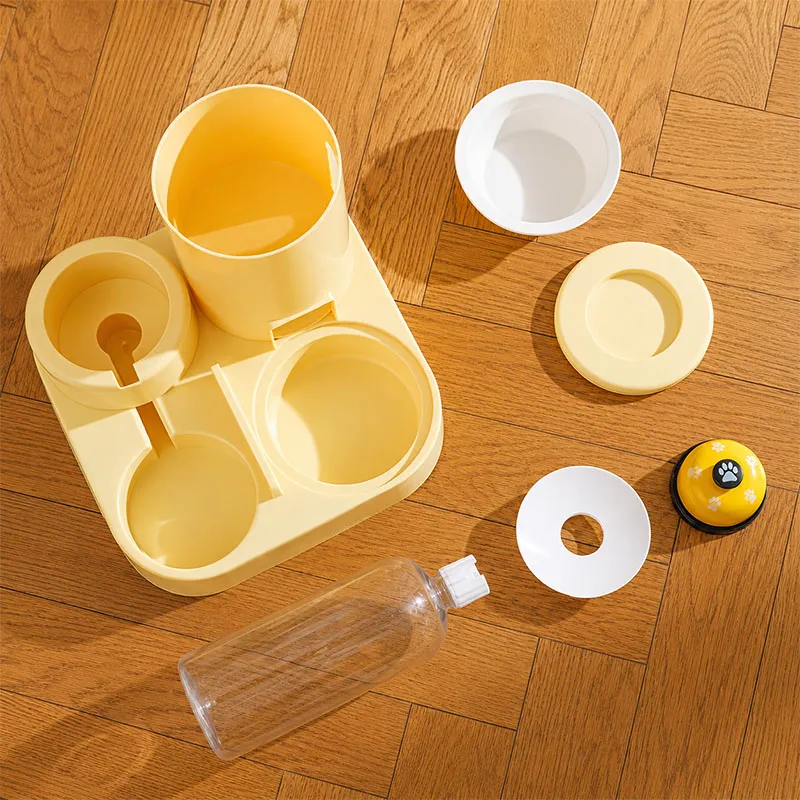
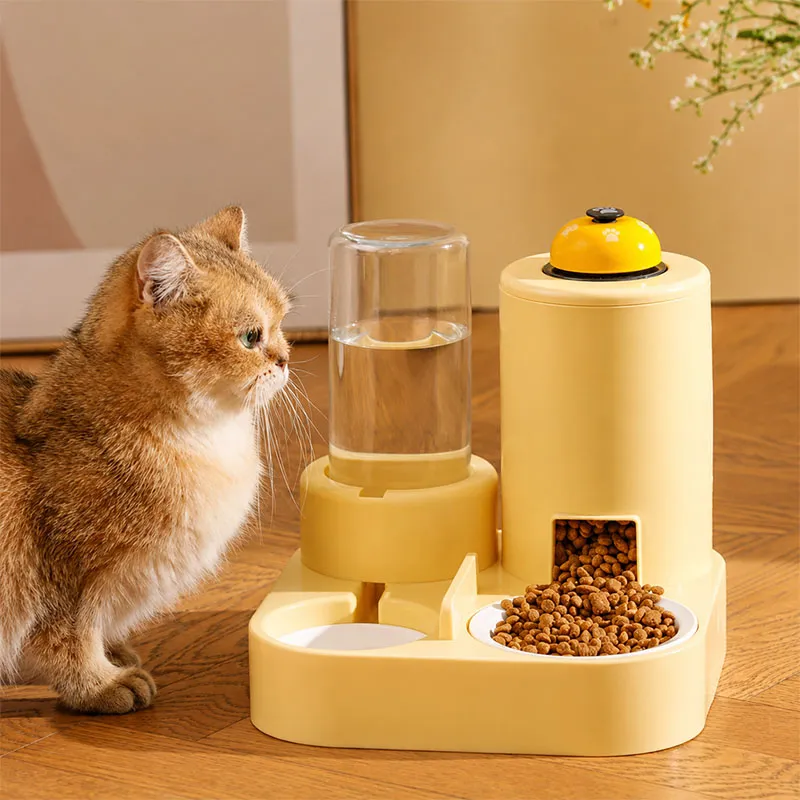
A gravity feeder has no power source. Food and water sit in a reservoir above a bowl, and gravity — combined with the vacuum created as the pet drinks or eats — keeps the bowl topped up until the reservoir empties. There’s nothing to charge, program, or wire.
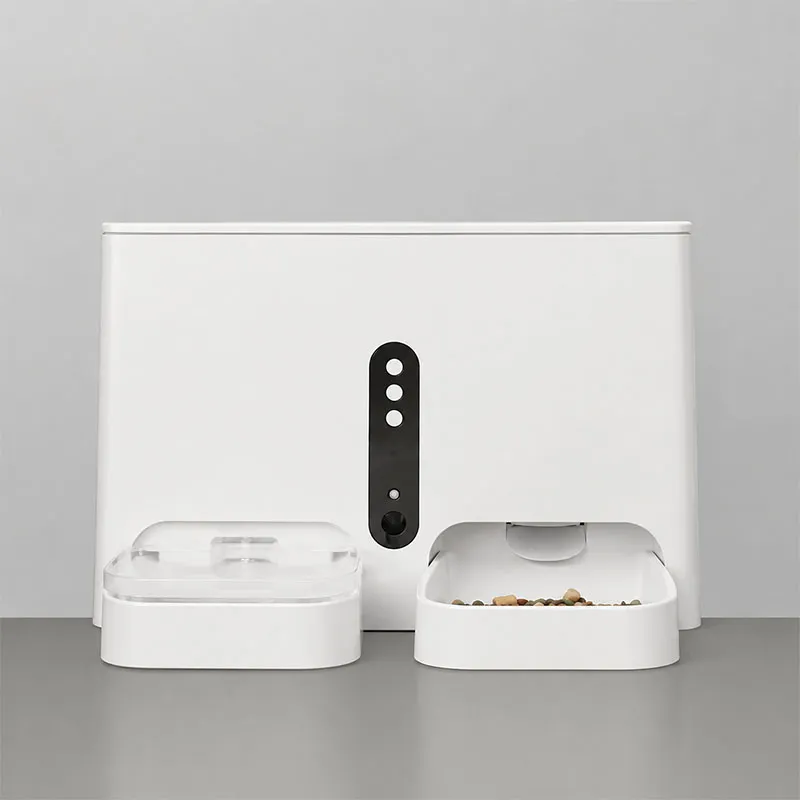
An automatic feeder is a powered device. It typically includes a dispensing mechanism, a timer or control interface, and in some configurations a battery or plug-in power source. That mechanism is what lets it dispense on a schedule instead of simply refilling by gravity, and it’s also the reason the two categories shouldn’t be quoted, stocked, or compliance-checked as if they were variations of the same product.
Side-by-Side: Capacity, Price and Power
| Attribute |
Gravity Feeder (2-in-1) |
Automatic Feeder (Electric) |
| Power source |
None — gravity-fed |
Powered; exact battery/plug spec not disclosed on public product pages |
| Food capacity |
2.5 L |
5 L |
| Water capacity |
1.2 L |
5 L |
| Website reference price |
US$3.19–$5.99 |
US$60–$85 |
| Moving parts |
None |
Motor and dispensing mechanism, plus a control interface |
| Refill behavior |
Refills by gravity as the bowl empties; total volume is fixed by reservoir size |
Can be scheduled or portion-controlled, subject to the mechanism functioning correctly |
The tenfold-plus price gap isn’t a markup difference — it reflects that one product is a molded plastic reservoir and the other is an electromechanical device with a motor, a control board, and (depending on configuration) a power supply.
Failure Modes: What Actually Breaks in the Field
The two categories don’t fail the same way, and a buyer who only asks “what’s the return rate” without asking “what’s the failure mode” is missing the more useful question.
Gravity feeders mostly fail through blockage rather than mechanical breakdown: fine or powdery kibble can bridge across the reservoir opening and stop flowing, and in humid climates food left in the reservoir too long can clump for the same reason. On the water side, algae or biofilm buildup in the reservoir is a cleaning issue, not a hardware defect — there’s no motor to fail, so most complaints trace back to how the unit is filled or cleaned rather than a manufacturing fault.
Automatic feeders fail differently. A jammed dispensing wheel, a drained battery, or a motor that stops responding can each halt feeding entirely — and unlike a gravity feeder, a full stop means the pet gets nothing rather than a slow trickle. If the specific unit includes app or Wi-Fi connectivity, connectivity drop-outs become an additional support ticket the gravity feeder simply doesn’t generate.
Does the Automatic Feeder Trigger FCC, RED or RoHS Requirements?
Because a gravity feeder has no electrical component, it generally sits outside the scope of electronics-specific compliance frameworks like the EU’s RoHS Directive 2011/65/EU, which restricts hazardous substances specifically in electrical and electronic equipment.
An automatic feeder is a different situation. As an electric product, RoHS-type material restrictions are relevant regardless of whether the unit connects wirelessly. If the specific automatic feeder a buyer is sourcing includes Wi-Fi or app connectivity — which the currently disclosed 5 L + 5 L listing doesn’t confirm one way or the other — then the FCC’s equipment authorization requirements apply for U.S. import, and the EU’s Radio Equipment Directive 2014/53/EU applies for products meeting the definition of radio equipment sold into the EU. Neither of these should be assumed based on the product name alone; a buyer should ask the supplier directly whether the unit being quoted has RF/wireless capability before assuming which compliance pathway applies, and should request the applicable documentation rather than listing the product as “FCC Certified” or “CE Certified” without it in hand.
Margin Math: $3–$6 vs $60–$85 Per Unit
The gravity feeder’s absolute margin dollars are small by definition — at a $3.19–$5.99 reference price, even a healthy markup percentage produces a modest per-unit profit. Its advantage is close to zero compliance overhead and a shorter path from quote to shelf, since there’s no electronics testing or documentation step to plan around.
The automatic feeder’s $60–$85 band produces far more margin dollars per unit sold, but that number doesn’t yet include whatever electronics-compliance documentation or testing the specific unit requires, and public product pages don’t quantify that cost or timeline. A buyer building a landed-cost model for the automatic feeder should treat compliance paperwork as a line item to confirm with the supplier, not as something already folded into the listed price.
Which Buyers Should Stock Which — Or Both
Gravity feeder
- Pro: low unit cost keeps it viable as an entry-level or backup SKU, including for travel or seasonal use
- Pro: no electronics compliance question to resolve before listing it
- Con: fixed capacity means more frequent refills for larger dogs or multi-pet households
- Con: bridging/clogging complaints are a real support cost even without a mechanical failure
- Con: no scheduling or portion control, which rules it out for buyers targeting routine-feeding customers
Automatic feeder
- Pro: higher capacity (5 L + 5 L) and scheduling appeal to buyers targeting a higher average order value
- Pro: differentiates a listing from the crowded low-cost gravity-feeder segment
- Con: a full mechanical or power failure stops feeding completely rather than slowing it
- Con: if wireless-enabled, compliance documentation needs confirming before the product ships
Retailers building out a full feeding category typically end up carrying both — the gravity feeder as a low-friction entry point and the automatic feeder as the higher-margin, higher-consideration purchase — rather than treating the choice as either/or.
MOQ and Sample Timeline Before You Order
The broader feeding-and-hydration product line is generally disclosed at 50–200 pieces depending on model and customization, but that’s a category-level figure, not a per-SKU guarantee for either the gravity or automatic feeder specifically — confirm the exact MOQ for the variant being quoted.
Sample production is generally stated at 7–14 days, with mass production following at roughly 30–45 days after sample approval. That timeline is a reasonable planning baseline for the gravity feeder. For the automatic feeder, a buyer should ask separately whether any electronics testing or compliance documentation step sits outside that window, since public materials don’t specify one — assuming the mechanical-product timeline applies equally to the electric unit is a common ordering mistake.
FAQ
Q: Is an automatic feeder just a more expensive version of a gravity feeder?
A: No. A gravity feeder is entirely mechanical with no power source; an automatic feeder is an electric device with a motor and control mechanism. The price gap reflects a different product category, not a premium tier of the same product.
Q: Does the gravity feeder need FCC or RoHS compliance?
A: Generally no, since it has no electrical component and falls outside frameworks that specifically govern electrical and electronic equipment.
Q: Does the automatic feeder need FCC or CE certification?
A: It depends on whether the specific unit includes Wi-Fi or app connectivity, which isn’t confirmed on the currently disclosed 5 L + 5 L listing. As an electric product it’s generally subject to RoHS-type material restrictions regardless; FCC and RED requirements apply specifically if RF/wireless capability is present. Confirm with the supplier and request documentation before listing either claim.
Q: What’s the biggest ordering mistake buyers make between these two?
A: Assuming the same MOQ and sample timeline apply to both. The 50–200-piece figure and 7–14-day sample window are disclosed at the product-line level; the automatic feeder specifically should be confirmed for any additional compliance-documentation lead time.










 September 02, 2026